Cooperatives in India
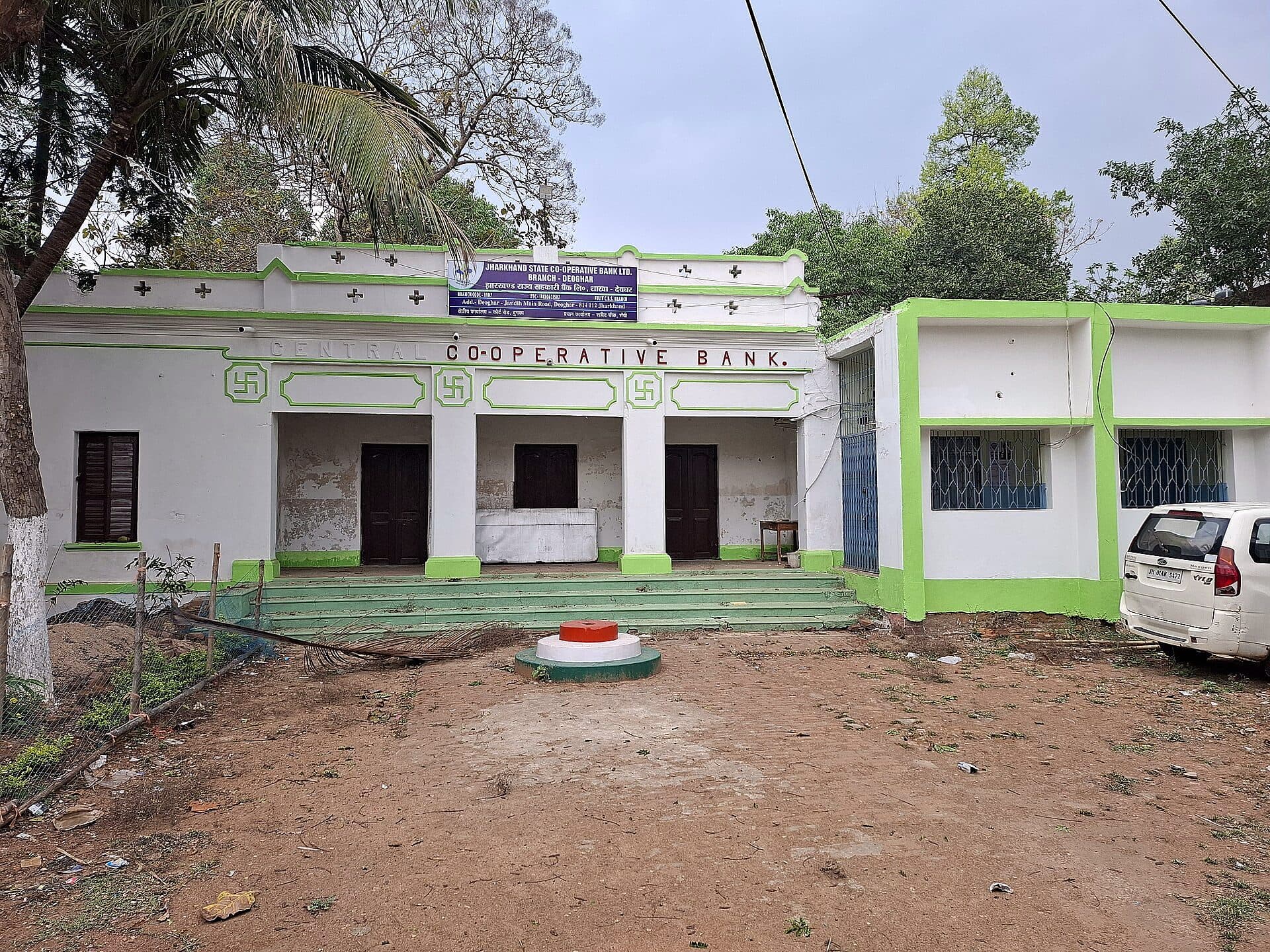

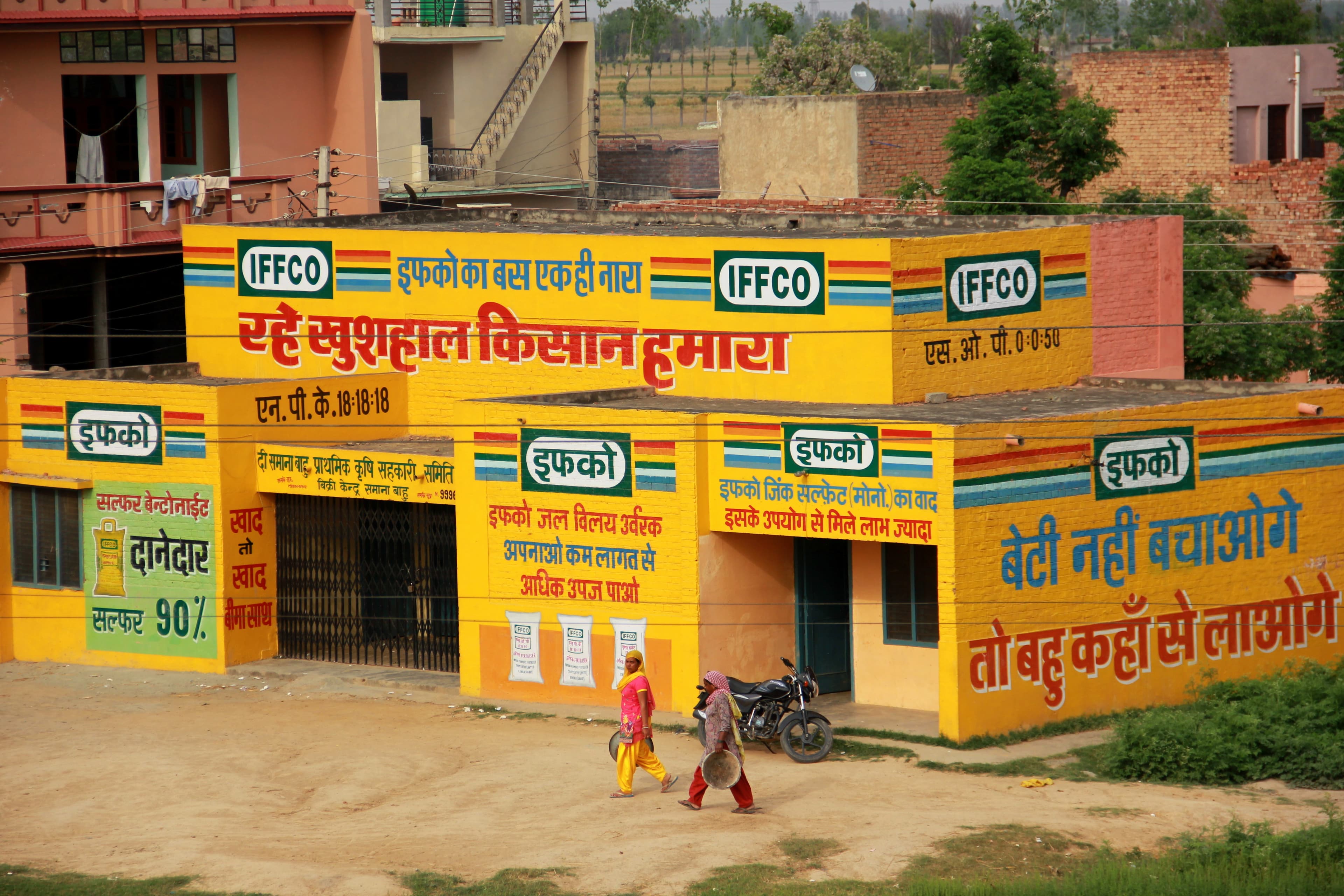
Real cooperatives in India, photographed on location. Full credits on our attributions page.
Overview of the Cooperative Sector in India
India has one of the world's largest cooperative sectors, with over 850,000 cooperatives (including approximately 94,000 Primary Agricultural Credit Societies, or PACS) and more than 300 million members — roughly 22% of the population. Cooperatives are central to India's rural economy, particularly in dairy, fertilisers, sugar, cotton, fisheries, and banking.
The cooperative movement in India gained momentum during the colonial era with the Cooperative Societies Act of 1904 and expanded dramatically after independence. Today, the sector is bifurcated between state-level cooperatives (governed by individual State Cooperative Acts) and multi-state cooperatives (governed by the Multi-State Cooperative Societies Act, 2002). In 2021, the Government of India established a dedicated Ministry of Cooperation to strengthen the sector.
Amul and IFFCO are internationally recognized models of cooperative success. The Amul dairy cooperative revolutionized India's dairy industry through the 'White Revolution' (Operation Flood), while IFFCO has become the world's largest fertiliser cooperative by membership with 55 million members. These models have been studied globally as examples of how cooperatives can drive rural development and food security at scale.
How India's cooperative sector is structured
India's cooperatives are organised in tiers. At the base are Primary Agricultural Credit Societies (PACS) — roughly 94,000 village-level credit cooperatives that lend to farmers and supply inputs. Above them sit District Central Cooperative Banks (DCCBs) and, at the apex of each state, State Cooperative Banks (StCBs); together these form the three-tier short-term cooperative credit structure that channels rural finance across the country.
Most cooperatives are registered and regulated at state level under each state's own Cooperative Societies Act, by that state's Registrar of Cooperative Societies. Cooperatives whose operations cross state boundaries are registered separately and centrally as multi-state cooperative societies (see below). Cooperative banks have a dual-control quirk worth knowing: Urban Cooperative Banks and the higher tiers are supervised by the Reserve Bank of India for banking functions while the Registrar retains control over registration, management, and audit.
In July 2021 the Government of India created a dedicated Ministry of Cooperation, separating cooperative administration from the Ministry of Agriculture and giving the sector — captured in the slogan 'Sahkar se Samriddhi', prosperity through cooperation — its own policy home. The ministry has since driven PACS computerisation and model bye-laws aimed at making primary societies multi-purpose.
Multi-state cooperative societies and the CRCS
When a cooperative's objects extend to more than one state, it falls outside any single state law and is registered centrally with the Central Registrar of Cooperative Societies (CRCS) under the Multi-State Cooperative Societies Act, 2002. That Act — which replaced the 1984 Act and was substantially amended in 2023 — governs how these societies are registered, governed, audited, and wound up, and gives each a registration number in the MSCS/CR format.
These are the societies surfacing strongly in search: credit and thrift societies, urban cooperative banks, agriculture and dairy societies, housing societies and federations operating across state lines. They are concentrated in Maharashtra, Uttar Pradesh, Delhi, Tamil Nadu and Kerala. Our directory lists registered multi-state societies by type and by registered-office state.
Types of Cooperatives in India
Dairy Cooperatives
Organized under the Anand Pattern (Amul model), connecting village-level milk collection societies to district unions to state federations. India is the world's largest milk producer largely due to this network.
Agricultural Credit (PACS)
Primary Agricultural Credit Societies provide short-term credit to farmers. Approximately 94,000 PACS form the base of India's three-tier cooperative credit structure.
Urban Cooperative Banks (UCBs)
Over 1,500 UCBs provide banking services in urban and semi-urban areas, regulated by both the Reserve Bank of India and state registrars.
Sugar Cooperatives
Concentrated in Maharashtra and Uttar Pradesh, processing sugarcane from member farmers. Maharashtra's sugar cooperatives are among the largest agri-processing cooperatives globally.
Fertiliser & Input Cooperatives
IFFCO and KRIBHCO supply fertilisers and agricultural inputs to farmer members at competitive prices, covering hundreds of millions of smallholder farmers.
Notable Cooperatives in India
IFFCO (Indian Farmers Fertiliser Cooperative)
Fertilisers / AgricultureWith 55 million member farmers, IFFCO is the world's largest cooperative by membership. It produces over 9 million metric tons of fertilisers annually and operates plants at Kalol, Kandla, Phulpur, Aonla, and Paradeep.
AMUL / GCMMF (Gujarat Cooperative Milk Marketing Federation)
DairyTurnover exceeding $5 billion USD, AMUL is a federation of 18 district dairy unions with 3.6 million producer members. The 'Amul Model' of cooperative dairy development has been replicated across India and studied worldwide.
KRIBHCO (Krishak Bharati Cooperative)
FertilisersA multi-state cooperative with over 7,700 member societies, KRIBHCO produces urea and bio-fertilisers and provides agri-extension services to member farmers.
NAFED (National Agricultural Cooperative Marketing Federation)
Agricultural MarketingNAFED is the apex organization for agricultural marketing cooperatives in India, implementing price support operations for oilseeds and pulses and facilitating exports.
Regulatory Framework
| Primary Legislation | Multi-State Cooperative Societies Act, 2002 (central); individual State Cooperative Acts (state-level) |
| Regulator | Registrar of Cooperative Societies (state) + Central Registrar (multi-state) + Ministry of Cooperation |
| Key Year | 2002 (central); 2021 (Ministry established) |
| Notes | The Multi-State Cooperative Societies (Amendment) Act, 2023 introduced significant governance reforms including cooperative elections, audit standards, and dispute resolution mechanisms. |
How to Form a Cooperative in India
- 1
Determine jurisdiction: state-level (governed by State Cooperative Act) or multi-state (governed by Multi-State Cooperative Societies Act, 2002)
- 2
Gather minimum 10 persons (multi-state: two or more cooperatives from different states)
- 3
Prepare the Model Bylaws and Memorandum
- 4
File application with the Registrar of Cooperative Societies (state) or Central Registrar of Cooperative Societies (multi-state)
- 5
Submit documents: application, bylaws, list of promoter members, address proof, initial capital deposit evidence
- 6
Pay prescribed registration fee
- 7
Receive Certificate of Registration and commence operations
Related Cooperative Sectors
Frequently Asked Questions — Cooperatives in India
How many cooperatives exist in India?
India has over 850,000 cooperatives, including approximately 94,000 Primary Agricultural Credit Societies (PACS). Total membership exceeds 300 million people, representing about 22% of the population.
What is the Amul cooperative model?
The Amul Model (also called the Anand Pattern) is a three-tier structure: village-level milk producer societies at the base, district cooperative milk unions in the middle, and a state-level federation (like GCMMF) at the top. It was pioneered in Anand, Gujarat and replicated across India through Operation Flood.
Who regulates multi-state cooperatives in India?
Multi-state cooperatives (operating in two or more states) are registered with and regulated by the Central Registrar of Cooperative Societies under the Ministry of Cooperation, which was established in 2021.
What is PACS in Indian cooperatives?
PACS stands for Primary Agricultural Credit Societies — village-level credit cooperatives that provide short-term farm loans and input procurement services. India has approximately 94,000 PACS, forming the grassroots layer of the cooperative credit structure.
Learn More
Cooperatives in India — In-Depth Guide
History, legislation, notable organisations, and sector breakdowns.
Find Cooperatives in India
Browse 26,000+ cooperatives by sector, country, and size in our free directory.