Cooperatives in Brazil

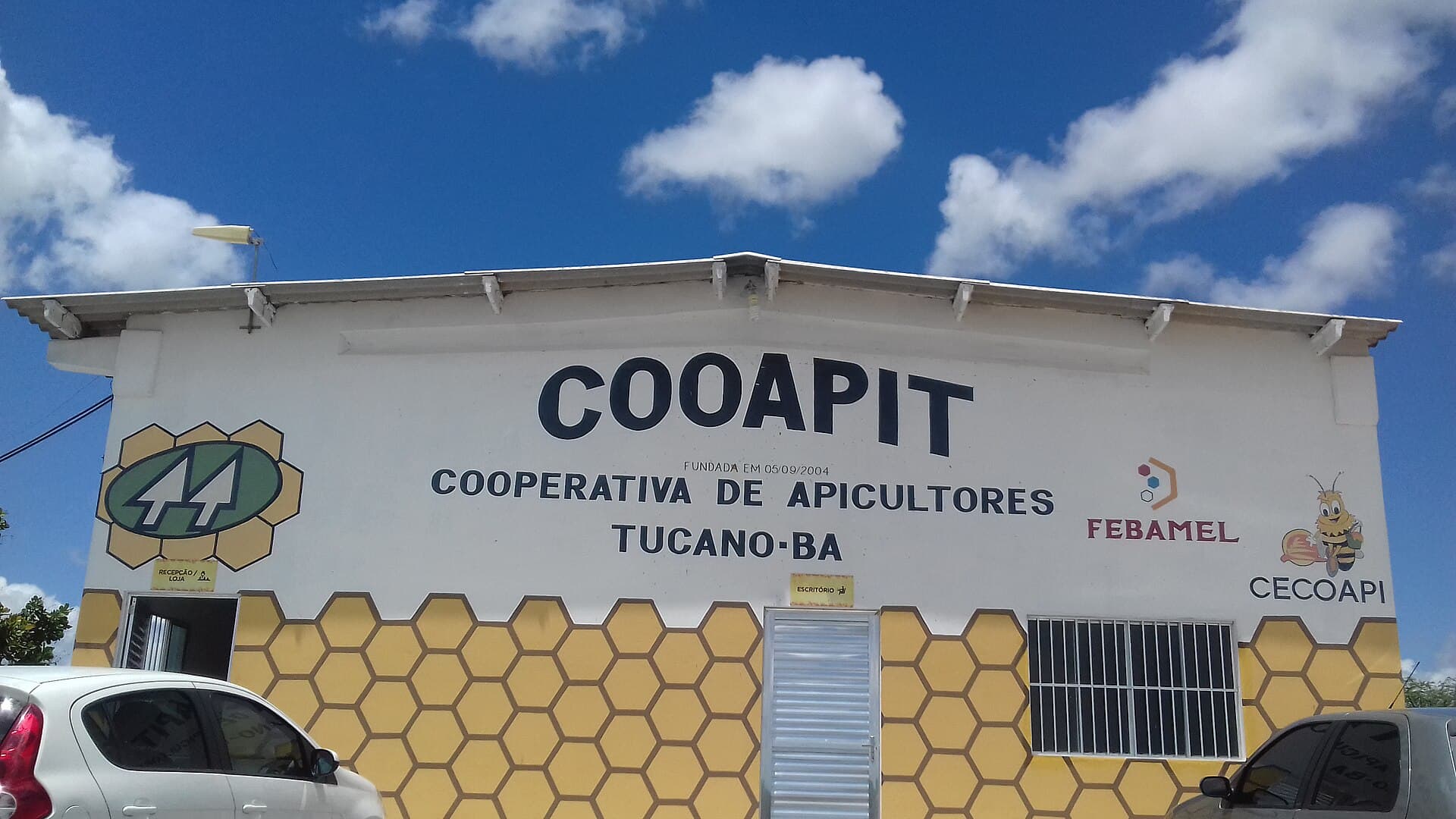

Real cooperatives in Brazil, photographed on location. Full credits on our attributions page.
Overview of the Cooperative Sector in Brazil
Brazil operates the largest cooperative economy in Latin America, with more than 15,000 cooperatives serving 22 million members across agriculture, credit, health, and transport. The sector contributes roughly 10% of Brazilian GDP and exports over $7 billion worth of agricultural products each year through cooperative channels.
The legal foundation is Law 5764/1971, Brazil's cooperative act, which established the one-member-one-vote principle, the sobras (surplus distribution to members in proportion to activity), and the OCB (Organização das Cooperativas Brasileiras) as the national apex organization. SESCOOP, the cooperative sector's mandatory training fund, operates alongside OCB at state level through a network of OCEs.
Brazil's cooperative roots lie in German and Italian immigrant communities in Rio Grande do Sul and Santa Catarina from the 1880s onward, who arrived with knowledge of Raiffeisen credit cooperative traditions. Today, the southern states of Paraná, Rio Grande do Sul, and Santa Catarina remain the most cooperative-dense regions, hosting Brazil's largest agricultural cooperatives and the Sistema Sicredi and Sicoob credit networks.
Types of Cooperatives in Brazil
Agricultural Cooperatives
1,500+ cooperatives handling soy, coffee, sugar cane, wheat, dairy, and fruit processing. Paraná is home to Brazil's most powerful agricultural cooperative cluster including Coamo (33,000+ members) and COOXUPÉ (world's largest coffee cooperative, 12,000+ members in Minas Gerais).
Credit Cooperatives (Sicoob & Sicredi)
Two dominant systems: Sistema Sicoob (6M+ members, R$120B+ loan portfolio) and Sistema Sicredi (5M+ members, 2,000+ service points). Both supervised by Banco Central do Brasil for prudential oversight.
Health Cooperatives (Unimed)
Sistema Unimed comprises 378 independent medical cooperatives with 120,000 physician-members and 22 million health plan beneficiaries — Brazil's largest private health insurer by beneficiary count.
Worker and Transport Cooperatives
900+ worker cooperatives including significant catadores (waste picker) cooperatives formally integrated into Brazil's solid waste management system by Law 12305/2010. 1,200+ transport cooperatives organizing taxi and truck owner-operators.
Notable Cooperatives in Brazil
COOXUPÉ (Cooperativa Regional de Cafeicultores em Guaxupé)
Coffee / AgriculturalThe world's largest coffee cooperative by volume, based in Minas Gerais. Has 12,000+ member coffee farmers and exports to major roasters across Europe, the US, and Japan. Operates its own quality laboratories and manages the full chain from cherry to export-ready green bean.
Sistema Sicoob
Credit / FinancialBrazil's largest credit cooperative network with 6 million+ members operating through 600+ affiliated credit cooperatives. Loan portfolio exceeds R$120 billion. Members access checking accounts, loans, insurance, and investment products through Bancoob as the system's central bank.
Sistema Unimed
Health / MedicalNetwork of 378 independent medical cooperatives with 120,000 physician-members and 22 million health plan beneficiaries. Brazil's largest private health insurer. Individual cooperatives range from small municipal operations to Unimed-BH (3 million beneficiaries in greater Belo Horizonte).
Coamo Agroindustrial Cooperativa
AgriculturalBrazil's single largest agricultural cooperative by member count, with 33,000+ farmer-members in Paraná producing soy, wheat, corn, and coffee. Annual revenue exceeds R$16 billion with grain storage infrastructure spanning the entire state.
Regulatory Framework
| Primary Legislation | Lei 5764/1971 — Brazilian Cooperative Act |
| Regulator | OCB (Organização das Cooperativas Brasileiras) + State OCEs; Banco Central do Brasil (credit cooperatives); ANS (health cooperatives) |
| Key Year | 1971 |
| Notes | Law 5764 defines the one-member-one-vote principle, governs surplus distribution (sobras), provides tax advantages (no corporate income tax on sobras distributed to members), and mandates SESCOOP contributions. Credit cooperatives are additionally supervised by Banco Central under BCB Resolution 4434/2015. |
How to Form a Cooperative in Brazil
- 1
Assemble minimum 20 founding members (natural persons or legal entities eligible under Law 5764)
- 2
Draft estatuto social (bylaws) covering purpose, membership classes, governance, surplus distribution, and capital structure
- 3
Hold a founding general assembly to approve bylaws and elect initial officers
- 4
Register with the state OCE (Organização das Cooperativas Estaduais) of the relevant state
- 5
Obtain CNPJ (tax registration number) from the Receita Federal
- 6
Register with Junta Comercial (commercial registry) of the relevant state
- 7
Affiliate with SESCOOP for mandatory cooperative education and training fund contributions
- 8
Credit cooperatives must additionally obtain authorization from Banco Central do Brasil before commencing deposit-taking operations
Frequently Asked Questions — Cooperatives in Brazil
What is OCB and what does it do?
OCB (Organização das Cooperativas Brasileiras) is Brazil's national cooperative apex organization, established in 1969 and given official status under Law 5764/1971. It registers and represents all cooperatives at the federal level, advocates for cooperative-friendly legislation, and coordinates the national system of state cooperative organizations (OCEs). Every legally operating cooperative in Brazil must be affiliated with its state OCE.
What is COOXUPÉ and why is it significant?
COOXUPÉ (Cooperativa Regional de Cafeicultores em Guaxupé) is the world's largest coffee cooperative by volume, based in Minas Gerais state. With 12,000+ member farmers, it exports to major roasters including illycaffè, Nespresso, and Starbucks, bypassing intermediary exporters and capturing a larger share of value for member farmers.
How does Unimed work as a health cooperative?
Unimed is a network of 378 legally independent medical cooperatives, each operating in a defined geographic territory. Physician-members are simultaneously the workers providing services and the owners of the cooperative. More than 22 million Brazilians hold Unimed health plans. Inter-cooperative reciprocity agreements allow access to Unimed network hospitals nationwide.
How are credit cooperatives regulated in Brazil?
Credit cooperatives in Brazil — whether affiliated with Sicoob, Sicredi, or independent — are supervised by the Banco Central do Brasil (BCB) for prudential and financial stability purposes, exactly like commercial banks. They must meet capital adequacy requirements, maintain liquidity reserves, and submit to BCB inspections, while governance must remain democratically controlled by members under Law 5764.
Learn More
Cooperatives in Brazil — In-Depth Guide
History, legislation, notable organisations, and sector breakdowns.
Find Cooperatives in Brazil
Browse 26,000+ cooperatives by sector, country, and size in our free directory.