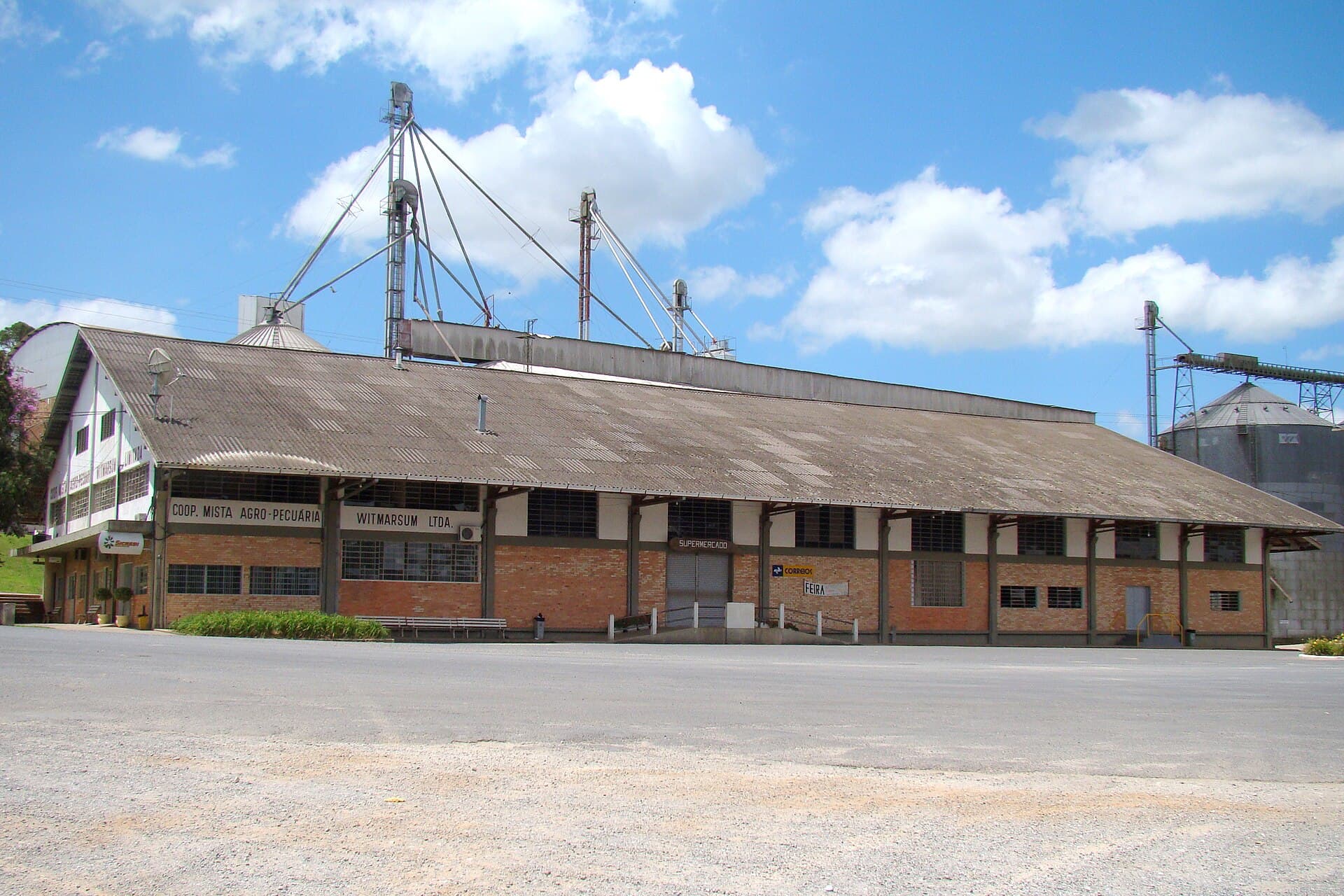
Brazil operates the largest cooperative economy in Latin America, with more than 15,000 cooperatives serving 22 million members across agriculture, credit, health, and transport. The sector contributes roughly 10% of Brazilian GDP and exports over $7 billion worth of agricultural products each year through cooperative channels.
Brazil's Cooperative Economy at a Glance
| Indicator | Figure |
|---|---|
| Total cooperatives | 15,000+ |
| Total members | 22 million+ |
| Jobs generated | 500,000+ |
| Agricultural cooperative exports | $7B+ per year |
| Largest credit coop network | Sistema Sicoob — 6M+ members |
| Largest health coop network | Sistema Unimed — 120,000 physician-members |
| Largest coffee cooperative | COOXUPÉ — world's largest |
| Regulatory apex | OCB (Organização das Cooperativas Brasileiras) |
| Governing law | Law 5764/1971 |
History: From Immigrant Communities to a National Movement
Brazil's cooperative history begins in 1847, when the Hollandsche Colony — a Dutch immigrant settlement in the state of Paraná — organized what historians consider the country's first cooperative-style economic arrangement. The colony operated collective production and shared resource pools that anticipated the formal cooperative structures that would follow.
The real institutional foundations came with German and Italian immigrant communities in Rio Grande do Sul and Santa Catarina from the 1880s onward. These groups arrived with knowledge of European cooperative models — particularly the Raiffeisen credit cooperative tradition — and applied them to the economic reality of small farming in southern Brazil. Credit cooperatives and agricultural supply cooperatives multiplied in these regions, creating a cooperative culture that still defines the south of Brazil today.
Federal policy began to formalize the sector in the early 20th century. The government recognized cooperatives as distinct legal entities and provided early frameworks for agricultural credit cooperatives. But the decisive regulatory moment came in 1971, when Law 5764 — the Brazilian Cooperative Act — established the legal framework that still governs cooperatives. Law 5764 defined the single membership principle (one member, one vote), capped interest on capital, protected cooperatives from certain taxes applied to commercial companies, and established the obligation to create SESCOOP, the national cooperative education fund.
Post-World War II saw an explosion in agricultural cooperative development, particularly in Paraná, Mato Grosso, and Rio Grande do Sul. Farmers producing soybeans, sugar cane, and coffee organized large-scale processing and marketing cooperatives that would grow into the billion-dollar enterprises operating today.
Regulatory Structure: OCB and the National System
The Organização das Cooperativas Brasileiras (OCB) is the national apex organization for Brazilian cooperatives, established in 1969 and given official status under Law 5764/1971. OCB has a dual function: it represents cooperatives politically before the federal government, and it operates the national cooperative system through a network of state organizations.
The structure works as follows:
- OCB at the national level sets policy, advocates for legislation, and coordinates the sector
- State federations (OCEs — Organizações das Cooperativas Estaduais) in each of Brazil's 27 states register cooperatives, provide technical assistance, and represent regional interests
- Individual cooperatives affiliate to their state OCE and, through it, to OCB
SESCOOP (Serviço Nacional de Aprendizagem do Cooperativismo) operates alongside OCB as the cooperative sector's mandatory training and education fund. Cooperatives contribute a percentage of payroll to SESCOOP, which runs management training programs, leadership development courses, and financial education for cooperative members across the country.
Tax Treatment
Brazilian cooperatives operating under Law 5764 benefit from important tax advantages:
- Surplus distributed to members as sobras (cooperative surplus allocations) is not subject to corporate income tax at the cooperative level
- Operations carried out with members (as distinct from non-member business) receive favorable COFINS and PIS contribution treatment
- Cooperatives are exempt from certain commercial taxes that apply to regular corporations
These advantages reflect the constitutional recognition of cooperatives as a distinct organizational form supporting Brazil's rural and low-income populations.
Agricultural Cooperatives: The Dominant Sector
Agriculture is where Brazilian cooperatives are most economically significant. The country's major agricultural cooperatives operate at a scale comparable to large multinationals — processing millions of tonnes of grain, coffee, and dairy every year.
Soybean and Grain Cooperatives in Paraná
The state of Paraná is home to Brazil's most powerful agricultural cooperative cluster. Coamo Agroindustrial Cooperativa is Brazil's single largest agricultural cooperative by number of members, with over 33,000 farmer-members producing soy, wheat, corn, and coffee. Coamo's annual revenue exceeds R$16 billion, and its grain storage network spans the entire state.
C.Vale Cooperativa Agroindustrial operates similarly, with a diversified portfolio covering grain, poultry, pork, and dairy. C.Vale runs fully integrated supply chains — member farmers deliver grain, which feeds animals, which produce meat processed in cooperative slaughterhouses. Cocamar Cooperativa Agroindustrial and Castrolanda (founded by Dutch immigrants) complete the Paraná cluster, with Castrolanda particularly notable for its high-technology dairy and beef operations that have attracted international attention.
Coffee: COOXUPÉ and the World's Largest Coffee Cooperative
COOXUPÉ (Cooperativa Regional de Cafeicultores em Guaxupé) is, by volume, the world's largest coffee cooperative. Based in the Minas Gerais state, COOXUPÉ has more than 12,000 member coffee farmers and exports to major roasters across Europe, the United States, and Japan. The cooperative operates its own quality laboratories and manages the full chain from cherry to export-ready green bean. COOXUPÉ's model has made Minas Gerais — already Brazil's largest coffee-producing state — an internationally recognized origin for specialty and commercial coffee.
Sugar Cane
Brazil produces more sugar cane than any country on earth, and cooperatives play a central role in processing and logistics. While multinational sugar groups dominate some segments, cooperative-organized mill operations in São Paulo and Goiás process millions of tonnes annually through member-owned facilities.
Credit Cooperatives: Sicoob and Sicredi
Brazil has two dominant credit cooperative systems that together hold more than 11 million members — a base larger than most Brazilian commercial banks.
Sistema Sicoob
Sicoob (Sistema de Cooperativas Financeiras do Brasil) is Brazil's largest credit cooperative network. It had more than 6 million members by 2023, operating through over 600 affiliated credit cooperatives grouped into regional central cooperatives, which in turn connect to Bancoob (the system's central bank). Sicoob members access checking accounts, loans, insurance, investment products, and payment services at rates typically more favorable than commercial bank alternatives. The system's loan portfolio exceeds R$120 billion.
Sistema Sicredi
Sicredi is Brazil's second major credit cooperative network and the one most visibly branded to consumers. Operating primarily in the south and center-west regions — reflecting its roots in the German and Italian immigrant cooperative traditions — Sicredi has over 5 million members and a network of more than 2,000 service points. Sicredi was among the first cooperative financial institutions in Brazil to launch a full digital banking platform, competing directly with fintechs for younger members.
Both systems operate under the supervision of the Banco Central do Brasil (BCB) for prudential oversight, while maintaining affiliation with OCB.
Health Cooperatives: Sistema Unimed
Sistema Unimed is Brazil's largest cooperative health system and the country's largest private health insurer by number of beneficiaries. The system comprises 378 individual Unimed cooperatives, each operating as an independent medical cooperative in a defined geographic area, linked through a national federation structure.
At the national level, Unimed has approximately 120,000 physician-members — doctors who are simultaneously the workers providing medical services and the owners of the cooperative. More than 22 million Brazilians hold Unimed health plans, making it larger than most commercial insurers in the country.
The Unimed model works because it aligns the incentive structure differently from commercial health insurance: physician-members have an interest in keeping the cooperative financially sustainable, which creates pressure toward appropriate care decisions rather than pure volume billing. Critics note that this model can also create barriers to entry for non-member physicians in some regions.
Individual Unimed cooperatives range from small operations serving a single municipality to Unimed-BH (serving greater Belo Horizonte with over 3 million beneficiaries) and Unimed Paulistana, one of the largest health operators in São Paulo state.
Worker and Transport Cooperatives
Worker cooperatives in Brazil operate across cleaning services, construction, recycling, and professional services. The recycling sector is particularly significant: Brazil's network of catadores (waste pickers) cooperatives — organized under the National Movement of Waste Pickers (MNCR) — manages a substantial share of the country's recyclable material recovery. The government's national solid waste policy (Law 12305/2010) formally incorporated cooperative waste-picking organizations into Brazil's solid waste management system.
Transport cooperatives organize taxi drivers and truck owner-operators across most major Brazilian cities. The TRANSCOOP and similar systems enable individual vehicle owners to access dispatch systems, insurance, collective bargaining, and maintenance networks they could not afford individually. With the rise of app-based ride-hailing, many taxi cooperatives have integrated their fleets into platform-based dispatch, competing directly with Uber and 99.
Challenges Facing Brazilian Cooperatives
Political Interference
Large agricultural cooperatives in Brazil have occasionally faced pressure from state and federal governments seeking to influence procurement, pricing, or leadership decisions. Because cooperatives benefit from tax treatment and sometimes receive state credit lines at subsidized rates, they operate in a politically exposed position. Several large Paraná cooperatives have had governance controversies in which political factions competed for board control.
Management Complexity at Scale
Running a cooperative with 30,000 farmer-members is organizationally different from running a corporation with a single controlling shareholder. Decision-making cycles are longer, member communication is expensive, and maintaining genuine democratic governance becomes harder as membership grows. Some Brazilian cooperatives have addressed this by professionalizing management while keeping governance formally democratic — a balance that requires ongoing attention.
Consolidation Pressures
The 2019 agricultural credit crisis accelerated mergers among smaller agricultural cooperatives that could not individually maintain the capital reserves required by Banco Central regulations. Smaller cooperatives in commodity-producing regions either merged into larger systems or wound down operations. This consolidation has improved financial resilience but reduced the geographic density of cooperative services in some rural areas.
Brazil's Cooperative Sectors by the Numbers
| Sector | Cooperatives | Members | Notes |
|---|---|---|---|
| Agricultural | 1,500+ | 1.2M+ | Dominant by economic output |
| Credit | 1,000+ | 11M+ | Sicoob + Sicredi systems |
| Health | 378 | 22M beneficiaries | Unimed network |
| Worker | 900+ | 90,000+ | Includes recycling coops |
| Transport | 1,200+ | 120,000+ | Taxi and trucking |
| Infrastructure | 200+ | 600,000+ | Electrification coops |
| Education | 300+ | 50,000+ | Teaching cooperatives |
Sources: OCB Annual Report 2023, Banco Central do Brasil, Sistema Unimed
Frequently Asked Questions
What is OCB and what does it do?
OCB (Organização das Cooperativas Brasileiras) is Brazil's national cooperative apex organization, established in 1969 and given official status under Law 5764/1971. It registers and represents all cooperatives at the federal level, advocates for cooperative-friendly legislation, and coordinates the national system of state cooperative organizations (OCEs). Every legally operating cooperative in Brazil must be affiliated with its state OCE, which in turn is affiliated with OCB.
What is Law 5764/1971?
Law 5764 is Brazil's foundational cooperative law, passed in 1971 under the military government. It defines cooperatives as societies of persons organized for the mutual benefit of members, establishes the one-member-one-vote principle, sets rules for the distribution of surpluses (sobras), governs cooperative formation and dissolution, and provides the tax treatment framework. Despite being over 50 years old, Law 5764 remains the primary legal framework for cooperatives, supplemented by sector-specific regulations for credit cooperatives (supervised by Banco Central) and health cooperatives (supervised by ANS).
What is SESCOOP?
SESCOOP (Serviço Nacional de Aprendizagem do Cooperativismo) is the cooperative sector's mandatory education and training fund, created alongside OCB. Cooperatives contribute a percentage of their payroll to SESCOOP, which runs training programs for cooperative managers, leadership development for board members, and financial literacy programs for members. SESCOOP operates through state-level branches that deliver programs regionally. It functions similarly to SENAI (industrial training) or SEBRAE (small business) in Brazil's broader vocational training architecture.
Is Unimed a single cooperative or a network?
Unimed is a network of 378 legally independent medical cooperatives, each operating in a defined geographic territory. They are linked through a federal structure — regional federations coordinating neighboring cooperatives, and a national confederation (Unimed do Brasil) setting standards and enabling inter-cooperative portability of health plan coverage. This means that if you hold a plan with Unimed-Recife and travel to São Paulo, you can access Unimed-SP network hospitals under reciprocity agreements. Each local cooperative sets its own premium rates and coverage products within national guidelines.
How does COOXUPÉ compare to other coffee cooperatives globally?
COOXUPÉ is widely recognized as the world's largest coffee cooperative by volume exported. With 12,000+ member farmers in Minas Gerais's Sul de Minas region, it processes and exports millions of 60-kilogram bags annually. For comparison, Ethiopia's major coffee cooperatives under the Oromia Coffee Farmers Cooperative Union (OCFCU) handle several hundred thousand bags. COOXUPÉ's scale gives its members access to direct relationships with major roasters including illycaffè, Nespresso, and Starbucks, bypassing exporters and capturing a larger share of the value chain.
Can a foreign company or investor own shares in a Brazilian cooperative?
No. Brazilian cooperatives, by law, cannot issue shares or have investor-owners. Membership is personal, non-transferable, and not saleable. Foreign nationals can be members of Brazilian cooperatives if they are lawfully resident and economically active in Brazil (for example, a foreign farmer with a property and valid residency can join an agricultural cooperative). But there is no mechanism for foreign capital to hold an ownership stake in a cooperative as such.
How are credit cooperatives regulated differently from commercial banks?
Credit cooperatives in Brazil — whether affiliated with Sicoob, Sicredi, or operating independently — are supervised by the Banco Central do Brasil (BCB) for prudential and financial stability purposes, exactly like commercial banks. They must meet capital adequacy requirements, maintain liquidity reserves, and submit to BCB inspections. However, they are legally constituted under Law 5764 (and complemented by BCB Resolution 4434/2015), which means their governance structure must remain democratically controlled by members rather than shareholders. This dual supervision — OCB for cooperative identity, BCB for financial safety — creates a more complex regulatory environment than commercial banks face.
What is the role of cooperatives in Brazil's recycling sector?
Brazil's waste-picker cooperative network is one of the largest in the world. An estimated 800,000 catadores — informal waste pickers — operate across Brazilian cities, and tens of thousands of them are organized into cooperatives. The national solid waste policy (Law 12305/2010) requires municipalities to prioritize cooperative waste-picking organizations in their solid waste management contracts, giving these cooperatives a formal role in Brazil's recycling infrastructure. Organizations like ANCAT and MNCR coordinate policy advocacy. In cities like São Paulo, cooperative waste-picker organizations recover hundreds of tonnes of recyclables daily under municipal contracts.
Related Articles
- Types of Cooperatives — how agricultural, credit, and worker cooperatives differ
- Famous Cooperative Examples — global cooperative case studies
- Agricultural Cooperatives — the global landscape of farmer-owned cooperatives
- Credit Unions and Cooperative Banking — how cooperative banks operate
- How to Register a Cooperative — formation requirements in different countries
- Cooperative Laws by Country — legal frameworks worldwide
References & further reading
This guide is researched against primary sources. Where we cite figures, they reflect the most recent data published by these organisations at the time of writing.
- 1.Facts & figures on the cooperative movement — International Cooperative Alliance
- 2.Cooperatives and the world of work — International Labour Organization
Find Cooperatives Worldwide
Browse 26,000+ cooperatives by sector and country in our free directory.