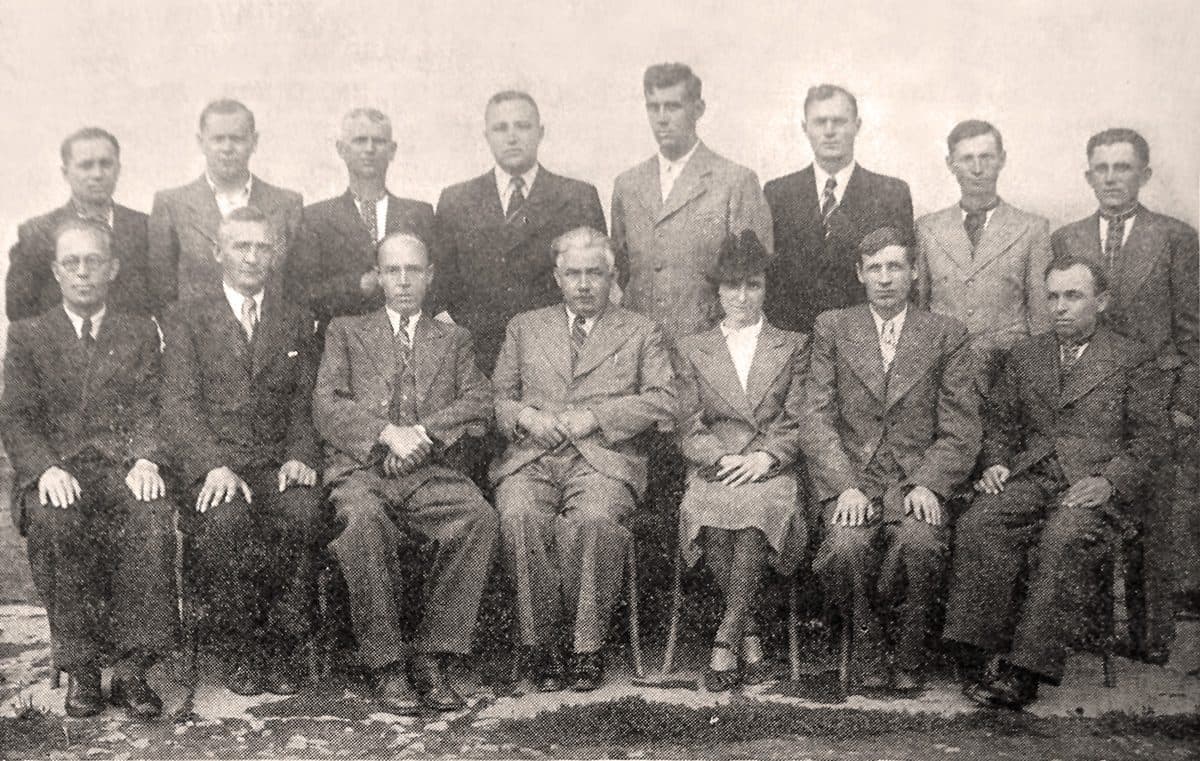
Ukraine's cooperative sector is undergoing a complicated revival from the ruins of the Soviet collective farm system. The kolkhoz (collective farm) and radhosp (state farm) that dominated Ukrainian agriculture until 1991 were not genuine cooperatives — they were state-controlled institutions where farmers had no real ownership or governance rights. Their dissolution after independence left millions of Ukrainian farmers holding small land plots (payi — land shares) without the infrastructure to farm them effectively. Genuine voluntary agricultural cooperatives have been growing since the mid-2000s, with significant acceleration after the 2014 Euromaidan revolution that reoriented Ukrainian economic policy toward European integration. Today Ukraine has approximately 3,000–4,000 registered cooperatives, with agricultural service cooperatives being the most dynamic growth area.
Cooperative Sector Overview
Ukraine's cooperative sector is relatively small given the country's size (population of approximately 44 million before the 2022 full-scale Russian invasion) but has been growing steadily. The most economically significant cooperative forms are:
- Agricultural Service Cooperatives (ASC) — providing machinery, grain storage, input procurement, and marketing to smallholder farmers
- Credit Unions — providing savings and credit to members outside the commercial banking system
- Consumer Cooperatives — a small but surviving sector rooted in the Soviet-era Ukrkoopsoyuz network
The 2022 Russian full-scale invasion of Ukraine has disrupted the entire economy, including the cooperative sector, with significant displacement of farmers from eastern and southern regions.
| Metric | Figure |
|---|---|
| Registered cooperatives | 3,000–4,000 |
| Agricultural cooperatives | ~1,200 (before 2022) |
| Credit union members | ~1 million+ |
| Primary legislation | Law of Ukraine on Cooperation (2003, amended) |
| Agricultural coop law | Law on Agricultural Cooperation (2021) |
| Regulator | Ministry of Agrarian Policy and Food |
| Apex body | Ukrkoopsoyuz (consumer sector); various for agricultural |
Ukraine's agricultural cooperative development has been driven significantly by EU-funded technical assistance programmes, particularly those supporting Ukraine's Association Agreement with the EU (2014) and the Deep and Comprehensive Free Trade Area (DCFTA). These programmes provided training, financial support, and market access facilitation for agricultural cooperatives.
Key Cooperative Sectors
Agricultural Service Cooperatives
The core of Ukraine's new cooperative movement is the Agricultural Service Cooperative (ASC) — a cooperative that provides agricultural services to its farmer-members rather than collectively marketing crops. This model suits the fragmented Ukrainian land ownership structure: millions of smallholders hold 1–4 hectare land plots (payi), too small to farm economically in isolation, who need collective access to machinery, inputs, and grain storage.
ASCs in Ukraine offer:
- Collective machinery use (tractors, combines, seeding and spraying equipment)
- Collective grain storage at cooperative elevators
- Collective input purchasing (seeds, fertilisers, pesticides at bulk prices)
- Collective marketing (aggregating grain from multiple small farms for sale to exporters)
Zelena Dolyna (Green Valley) cooperative in Poltava region is among the most studied examples of a successful Ukrainian ASC. It serves several hundred smallholder farmer-members, operates a grain elevator, and collectively purchases agricultural inputs. Members receive better prices and services than they could access individually.
Several ASCs in Vinnytsia, Poltava, and Khmelnytskyi regions — Ukraine's most agriculturally developed oblasts — have developed with support from the USAID Competitive Economy Programme and FAO Ukraine projects.
Credit Unions
Ukraine's credit union sector developed rapidly in the 1990s and early 2000s as millions of Ukrainians sought alternatives to commercial banks that were either unavailable in their region or had lost public trust through the banking system's instability. By the mid-2000s, Ukraine had over 800 registered credit unions with approximately 2 million members.
The 2008–2009 global financial crisis severely damaged Ukrainian credit unions. Many experienced member withdrawals and liquidity crises. Regulatory changes by the National Financial Services Commission (Natskomfinposlug) — later integrated into the National Bank of Ukraine (NBU) — tightened requirements and resulted in the closure of hundreds of credit unions.
By the early 2020s, approximately 400 credit unions remained active with around 1 million members. The National Association of Credit Unions of Ukraine (NACU) represents the sector and has worked with international bodies (WOCCU — World Council of Credit Unions) on regulatory reform and capacity building.
Consumer Cooperatives: Ukrkoopsoyuz
Ukrkoopsoyuz (Укркоопспілка — Ukrainian Cooperative Union) is the heritage consumer cooperative organisation, the direct institutional descendant of the Soviet-era cooperative trade system. It is one of Ukraine's oldest organisations, with roots in pre-revolutionary cooperative societies that were converted into the Soviet system.
Ukrkoopsoyuz operates a network of cooperative retail stores, primarily in rural and small-town Ukraine where commercial retailers have not penetrated. Its stores supply basic goods to villages and small towns. It also operates bakeries, procurement of agricultural products from households, and food processing enterprises. The cooperative employs tens of thousands of people and serves millions of rural consumers, though its retail market share has declined as commercial supermarket chains expanded in Ukrainian cities.
Ukrkoopsoyuz's cooperative structure involves regional consumer cooperative unions that are member-owners of the national union. In practice, the post-Soviet transition left governance formal rather than genuinely member-driven, but the institutional network remains significant.
Housing Cooperatives (ZhBK)
Zhytlovo-Budivelni Kooperatyvy (ZhBK) — housing construction cooperatives — were widespread in Soviet Ukraine, allowing urban residents to collectively finance apartment construction outside the state housing queue. Many Soviet-era apartment buildings in Ukrainian cities were built by ZhBK.
After independence, ZhBK were largely superseded by condominium associations (OSBB — Ob'yednannya Spivvlasnykiv Bagatokvartyrnykh Budynkiv) for existing housing management. New ZhBK continue to be formed for collective housing construction, though market-rate real estate developers dominate urban construction.
Legal Framework
Law of Ukraine on Cooperation (2003)
The Law of Ukraine "On Cooperation" (Zakon Ukrayiny "Pro Kooperatsiyu") of 2003 is the framework legislation for cooperatives. It defines a cooperative as a legal entity formed by physical or legal persons — natural persons in most cases — united on a voluntary basis to pursue common economic, social, and cultural objectives through membership contribution and democratic management.
Key provisions:
- Types: production cooperative (vyrobnycha kooperatyva), consumer cooperative (spozhyvcha kooperatyva), service cooperative
- Minimum 3 founding members
- General Meeting (Zahalni Zbory) as supreme governance body
- Supervisory Committee (Revisiyna komisiya)
- Reserve and special funds: mandatory allocations from surplus
Law on Agricultural Cooperation (2021)
A major legislative milestone was the Law of Ukraine "On Agricultural Cooperation" adopted in June 2021. This law specifically addresses agricultural cooperatives, defining two subtypes:
- Agricultural Service Cooperative (Silskohospodarska obsluhovuyucha kooperatyva) — provides services to members (machinery, storage, marketing, inputs)
- Agricultural Production Cooperative — collective production entity
The 2021 law created clearer governance rules for agricultural cooperatives, tax incentives (ASCs that serve only members receive favourable VAT treatment), state support programmes, and development of a national support mechanism. It was seen as a major enabler for agricultural cooperative growth and aligned Ukrainian law with EU cooperative standards.
Credit Union Regulation
Credit unions are regulated under the Law of Ukraine "On Credit Unions" (2002, amended) and supervised by the National Bank of Ukraine (NBU) since the NBU absorbed Natskomfinposlug's financial services oversight in 2020. The NBU has implemented updated prudential requirements for credit unions including capital adequacy ratios and liquidity requirements.
Post-Invasion Context
Since February 24, 2022, when Russia launched its full-scale invasion, Ukrainian cooperative law has operated under conditions of martial law with significant economic disruption. Several agricultural cooperatives in liberated territories (Kherson, Zaporizhzhia, Kharkiv oblasts) had operations damaged or destroyed. International support — including from cooperative organisations in the EU, US, and Canada — has included both emergency relief and cooperative rebuilding assistance.
Major Cooperatives
Ukrkoopsoyuz
Founded: 1920 (roots in 1895 cooperative movement) Members / stores: Operations in all regions Sector: Consumer cooperative retail, food processing, procurement
Ukrkoopsoyuz is the largest cooperative organisation in Ukraine by employment and the most geographically widespread. It operates thousands of retail stores in villages and small towns, maintains bakeries and food processing plants, and manages a network of warehouses. Despite competitive pressure from commercial retailers, Ukrkoopsoyuz remains a significant rural economic institution.
Zelena Dolyna (Green Valley) — Poltava
Founded: 2010s Members: Several hundred smallholder farmers Sector: Agricultural services (machinery, storage, inputs, marketing)
Zelena Dolyna in Poltava Oblast is among Ukraine's most cited ASC success stories, studied by development organisations and Ukrainian agricultural policy researchers. Its model — pooling machinery, grain storage, and input purchasing across small farms — improved member farm economics and reduced dependence on large agro-holdings that had been absorbing smallholder land through lease concentrations.
National Association of Credit Unions of Ukraine (NACU)
Founded: 1994 Members: Through affiliated credit unions (~400 credit unions, ~1 million individual members) Sector: Credit union sector representation and support
NACU is the apex body for Ukrainian credit unions, affiliated with WOCCU. It provides training, liquidity support through an internal liquidity fund, and regulatory advocacy. NACU-member credit unions are generally stronger than non-affiliated ones because of shared governance standards and mutual support mechanisms.
Agricultural Service Cooperative "Poltavskyi Zhytniuk"
Founded: 2016 Members: ~150 grain farmers Sector: Agricultural services (grain collection, storage, collective marketing)
Representative of a new wave of grain-oriented ASCs in central Ukraine. This cooperative was formed with FAO technical assistance and provides grain elevator services, input procurement, and export marketing assistance to member farms. It receives favourable tax treatment under the 2021 agricultural cooperation law.
Kharkiv Regional Consumer Cooperative Union
Founded: Soviet era; restructured post-1991 Sector: Consumer cooperative retail and food production (Kharkiv Oblast)
The Kharkiv regional cooperative union — like all regional unions — operates within the Ukrkoopsoyuz network. Kharkiv Oblast's proximity to the Russian border made its cooperative infrastructure particularly vulnerable to the 2022 invasion. Post-liberation reconstruction includes rebuilding cooperative stores in villages that were occupied.
Challenges and Opportunities
Post-Kolkhoz Land Fragmentation
Ukraine's most fundamental agricultural cooperative challenge is structural. When kolkhozy were dissolved, land was divided into theoretical land shares (payi) allocated to former collective farm workers. This created a pattern of extreme land fragmentation — millions of plots averaging 2–4 hectares — that is economically inefficient. Large agro-holdings lease these payi and farm them corporately. For smallholders who want to farm their payi themselves, cooperatives are the essential aggregation mechanism. But building trust and governance quality in a society where "cooperative" was synonymous with Soviet coercion takes time.
War Damage
The 2022 Russian invasion and subsequent war has destroyed cooperative infrastructure in eastern and southern Ukraine. Grain elevators, machinery, and cooperative stores in occupied and conflict-affected areas were damaged or destroyed. The reconstruction of Ukrainian agricultural cooperatives in liberated territories is a major international development priority, with support from ICA, international credit union organisations, and EU development programmes.
Trust in Financial Cooperatives
Ukraine's credit union sector suffered from failures in 2008–2010 and again in the 2014–2015 economic crisis following Russia's annexation of Crimea. Members who lost savings are cautious about re-joining. The NBU's tighter regulation has improved the surviving credit unions' governance, but rebuilding member trust requires demonstrated stability over time.
EU Integration Opportunity
Ukraine's path toward EU membership — accelerated by the 2022 invasion — creates an opportunity for cooperative sector development aligned with EU standards. European agricultural cooperatives are significant participants in EU rural development programmes. Ukrainian cooperatives, if they meet EU governance and transparency standards, could access EU cooperative support mechanisms once Ukraine joins. This creates incentives for quality improvement that domestic policy alone might not generate.
Related Articles
- Agricultural Cooperatives
- Credit Cooperatives
- Worker Cooperatives — How They Work
- History of Cooperatives
- Cooperative Principles
- Cooperatives in Germany — European cooperative model
- Cooperatives in France — EU agricultural cooperative context
References & further reading
This guide is researched against primary sources. Where we cite figures, they reflect the most recent data published by these organisations at the time of writing.
- 1.Facts & figures on the cooperative movement — International Cooperative Alliance
- 2.Cooperatives and the world of work — International Labour Organization
Find Cooperatives Worldwide
Browse 26,000+ cooperatives by sector and country in our free directory.