What is an Agricultural Cooperative?
An agricultural cooperative (often shortened to "ag co-op") is a cooperative owned and controlled by farmers who join together to market their products, purchase inputs, or access services that would be difficult or uneconomical to obtain individually.
The basic logic is straightforward: a single wheat farmer selling 500 acres of grain has almost no leverage when negotiating with a multinational grain buyer. But 2,000 wheat farmers selling collectively through a cooperative can command better prices, access larger markets, and invest in storage, processing, and transportation infrastructure that no individual member could afford alone.
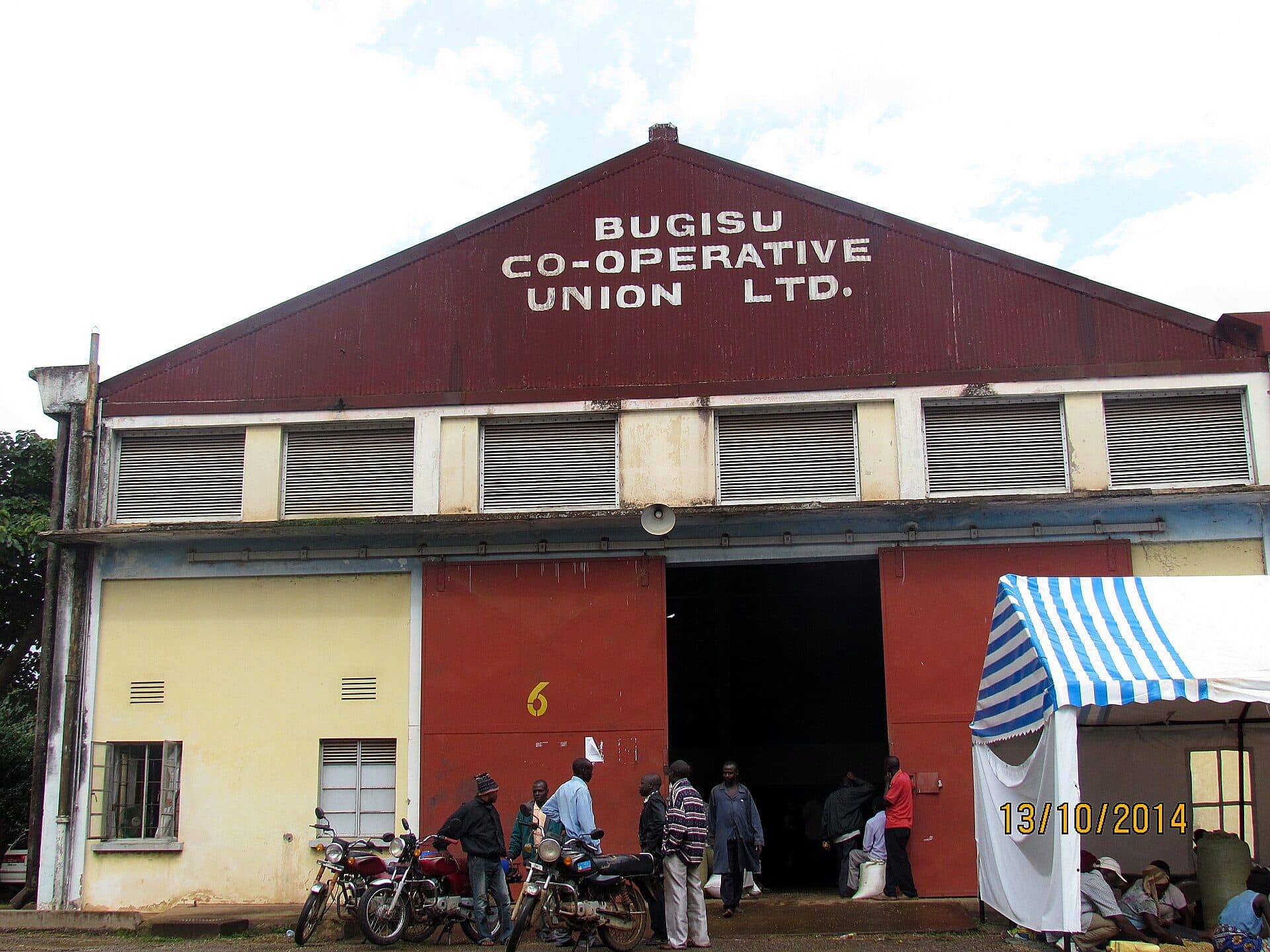
Agricultural cooperatives are among the oldest and most widespread forms of cooperative enterprise. They exist in virtually every country where farming takes place, from the dairy cooperatives of Scandinavia to the coffee cooperatives of East Africa. See the agricultural cooperatives sector page for industry statistics and resources. The USDA Rural Development counts approximately 1,620 agricultural cooperatives operating in the United States alone, with combined revenues exceeding $200 billion annually. Globally, cooperatives handle an estimated 30% of all farm output.
Unlike investor-owned agribusinesses, agricultural cooperatives distribute profits to their farmer-members based on how much each member uses the cooperative's services — not based on how many shares someone holds. This structure, grounded in the cooperative principles, means the people who grow the food also control the business that sells it.
How Agricultural Cooperatives Work
The mechanics of an ag co-op depend on what it does, but the governance model follows the same pattern seen across all types of cooperatives:
Membership. Farmers join by purchasing a membership share and agreeing to the cooperative's bylaws. Most cooperatives require members to commit a minimum volume of product or purchasing activity.
Democratic control. Each member gets one vote regardless of farm size — a 50-acre vegetable grower has the same say as a 5,000-acre commodity producer. Members elect a board of directors who hire professional management.
Patronage dividends. At the end of the fiscal year, net earnings are allocated back to members in proportion to their patronage (the volume of business they conducted through the co-op). If a dairy farmer delivered 2% of the cooperative's total milk volume, they receive 2% of the net surplus. These payments are called patronage dividends or patronage refunds.
Retained equity. Cooperatives typically retain a portion of patronage allocations as equity capital to fund operations, infrastructure, and growth. This retained equity is eventually returned to members through a revolving fund — older allocations are paid out in cash as new ones are retained.
Marketing agreements. Many cooperatives require members to deliver all or a specified portion of their production to the cooperative. This ensures the co-op has sufficient volume to fulfill contracts and operate processing facilities efficiently.
Types of Agricultural Cooperatives
Agricultural cooperatives generally fall into four functional categories, though many cooperatives operate across multiple categories simultaneously.
Marketing Cooperatives
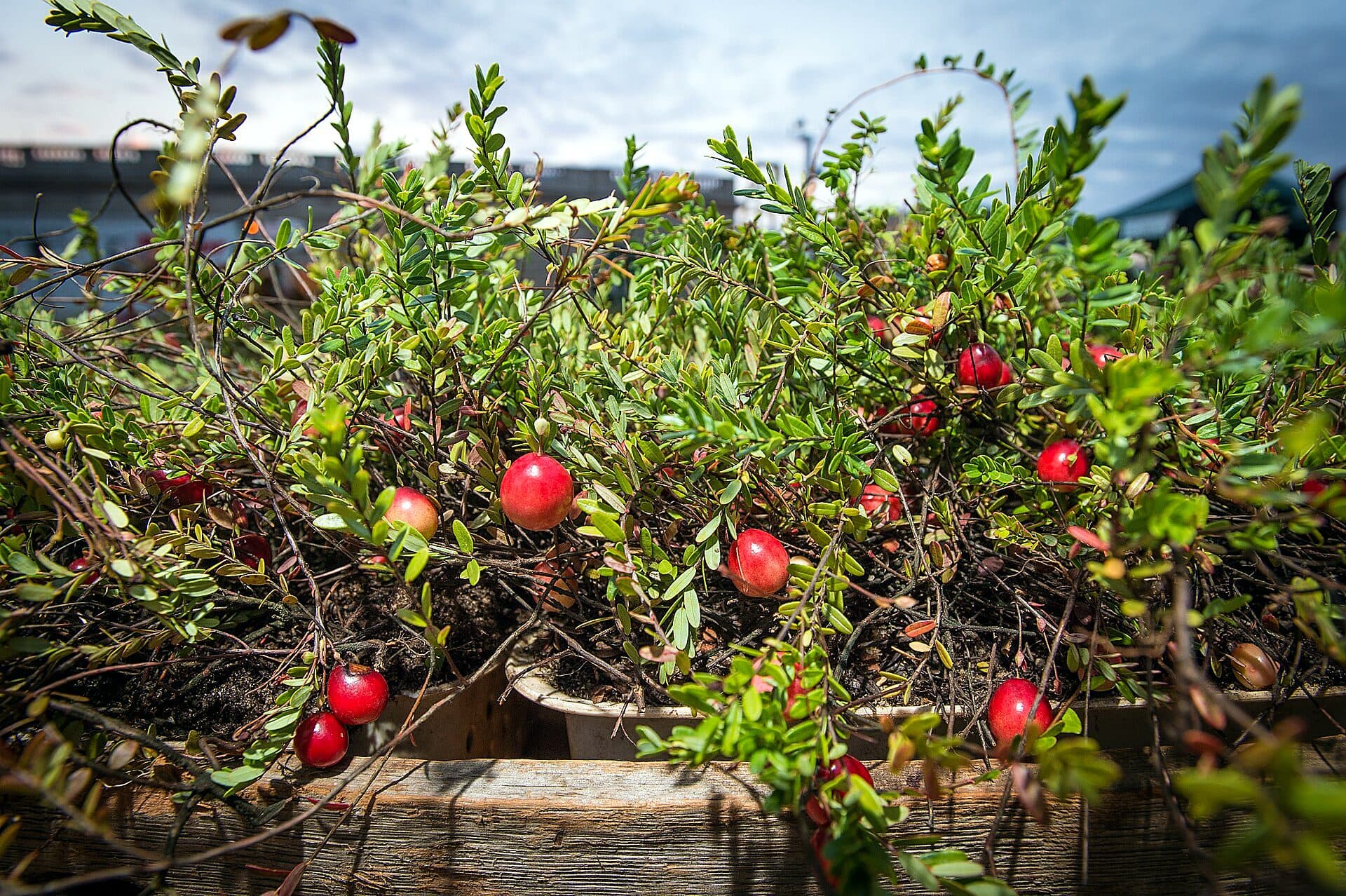
Marketing cooperatives collect, process, and sell their members' products. This is the largest category by revenue. The cooperative negotiates prices with buyers, manages logistics, and often adds value through processing — turning raw milk into cheese, cranberries into juice, or almonds into packaged snack products.
The key advantage is aggregation. By pooling output from hundreds or thousands of farms, a marketing cooperative achieves volumes that open doors to retail chains, food manufacturers, and export markets that no individual farmer could access.
Notable marketing cooperatives include:
- Dairy Farmers of America — roughly 11,000 member farms, approximately $18 billion in annual revenue, the largest dairy cooperative in the United States
- Land O'Lakes — 1,600+ member-owners, known for butter and dairy products but also a major animal feed and crop input supplier
- Ocean Spray — owned by approximately 700 cranberry and grapefruit growers across the US, Canada, and Chile
- Sunkist Growers — one of the oldest ag co-ops in the US (founded 1893), marketing citrus from California and Arizona
- Blue Diamond Growers — approximately 3,000 almond growers, producer of the Blue Diamond brand
- Organic Valley — a cooperative of over 1,600 organic family farms across the US, with roughly $1.2 billion in annual sales
Supply and Purchasing Cooperatives
Supply cooperatives (also called purchasing cooperatives or farm supply cooperatives) buy inputs — seed, fertiliser, fuel, equipment, crop protection chemicals, animal feed — in bulk and resell them to members at cost or near-cost.
The economics are simple: a cooperative purchasing 50,000 tonnes of fertiliser negotiates a far better unit price than a single farmer buying 50 tonnes. Members benefit from volume discounts, consistent supply, and quality assurance.
CHS Inc. is the largest supply cooperative in the US (and one of the largest in the world), with over $35 billion in annual revenue spanning energy, grain marketing, food processing, and farm supply. Its member-owners include both individual farmers and local cooperatives.
Land O'Lakes also operates a major supply division through its Purina Animal Nutrition and WinField United crop input businesses — an example of a cooperative that spans both marketing and supply functions.
Service Cooperatives
Service cooperatives provide specific services that individual farms cannot economically perform alone: grain storage, drying facilities, trucking and logistics, veterinary services, artificial insemination programs, irrigation management, or accounting and financial services.
Many rural electric cooperatives, while technically utility cooperatives rather than agricultural cooperatives, were established specifically to serve farming communities that investor-owned utilities refused to wire — the Rural Electrification Act of 1936 catalysed the creation of over 900 electric co-ops across rural America.
Farm credit cooperatives and mutual insurance companies also serve the agricultural sector extensively. The US Farm Credit System — a network of borrower-owned lending institutions — provides roughly 45% of all farm real estate credit in the country.
Bargaining Cooperatives
Bargaining cooperatives do not handle physical products. Instead, they negotiate prices and contract terms on behalf of their members, who then deliver products directly to buyers. This model is common in fruit and vegetable sectors where growers contract with processors or fresh-market buyers.
The bargaining cooperative's power comes from representing a significant share of supply in a particular crop or region. If a bargaining cooperative represents 60% of the tomato growers in a processing region, buyers have strong incentive to negotiate in good faith.
Major Agricultural Cooperatives Worldwide
Agricultural cooperation is not an American phenomenon. Some of the world's largest and most influential cooperatives operate outside the United States.
Fonterra (New Zealand)
Fonterra Co-operative Group is owned by approximately 9,000 New Zealand dairy farmers and processes around 80% of New Zealand's raw milk. With annual revenue exceeding NZ$20 billion, it is the world's largest exporter of dairy products, selling into over 130 countries. Fonterra's scale gives New Zealand — a country of 5 million people — outsized influence in global dairy markets.
Amul (India)
Amul (the brand of the Gujarat Cooperative Milk Marketing Federation) is one of the most successful cooperative enterprises in the developing world. Cooperatives in India — and AMUL in particular — have transformed smallholder dairy farming at national scale. Founded in 1946, Amul collects milk from over 3.6 million farmer-members through a three-tier structure of village cooperatives, district unions, and the state federation. It processes over 25 million litres of milk per day and generates annual revenue exceeding $8 billion. The "Amul model" — also called the Anand Pattern after the town where it began — has been replicated across India and studied worldwide as a template for smallholder cooperative development.
Arla Foods (Denmark/Sweden)
Arla Foods is a cooperative owned by approximately 8,400 dairy farmers in Denmark, Sweden, Germany, Belgium, Luxembourg, and the UK. With annual revenue of about EUR 13.8 billion, it is Europe's largest dairy company and the world's fourth-largest. Arla produces household brands including Lurpak butter, Arla organic milk, and Castello cheese.
Zen-Noh (Japan)
Zen-Noh (the National Federation of Agricultural Cooperative Associations) is the marketing and purchasing arm of Japan's JA cooperative system, which encompasses virtually every farming household in the country. Zen-Noh handles grain, livestock, petroleum, and farm supplies with annual revenue exceeding $40 billion, making it one of the largest agricultural enterprises on Earth. The JA system also provides banking, insurance, healthcare, and funeral services to its members — an unusually comprehensive cooperative ecosystem.
Other Notable Cooperatives
- Zespri (New Zealand) — the world's largest marketer of kiwifruit, owned by 2,800 growers
- Kerry Group (Ireland) — originated as a dairy cooperative, now a publicly listed ingredients company (transitioned from cooperative to corporate structure)
- FrieslandCampina (Netherlands) — owned by approximately 14,500 dairy farmers, annual revenue around EUR 13 billion
- Sodiaal (France) — France's largest dairy cooperative, approximately 17,000 member farms
The Economics of Agricultural Cooperatives
Patronage Dividends and Pooling
The economic engine of an agricultural cooperative is the patronage system. Rather than paying farmers a fixed price at the point of delivery, many cooperatives operate on a pooling basis:
- Members deliver product to the cooperative throughout the season
- The cooperative sells the pooled product over time, often achieving higher average prices than spot-market sales
- Members receive an initial payment at delivery (an advance or "progress payment")
- At year-end, the cooperative distributes remaining net earnings as patronage dividends
This pooling mechanism smooths price volatility for individual farmers. Instead of being at the mercy of the spot price on the day they happen to sell, members receive a blended average price across the entire marketing period.
Bargaining Power
Agricultural markets are characterised by a structural imbalance: many small sellers (farmers) face few large buyers (processors, retailers, exporters). Economists call this oligopsony — a market with few buyers. The result, without collective action, is that buyers can push prices below competitive levels.
Cooperatives address this by consolidating supply. When 80% of US milk flows through cooperatives — as it does — dairy processors cannot simply bypass the cooperative system. The Capper-Volstead Act of 1922 explicitly grants US agricultural producers the right to collectively market their products through cooperatives without violating antitrust law. The NCBA CLUSA maintains ongoing advocacy for cooperative rights under this framework.
Cost Reduction
Supply cooperatives achieve savings through scale purchasing, but the cost advantages extend further. Cooperatives can invest in infrastructure — grain elevators, cold storage, processing plants, rail terminals — that reduces per-unit costs for all members. A cooperative-owned fertiliser blending plant, for example, allows members to access custom blends at manufacturing cost rather than retail markup.
At-Cost Operations
Unlike investor-owned firms that must generate returns for shareholders, cooperatives can operate at cost. Any surplus above operating expenses is returned to members. This structural difference means cooperatives exert competitive pressure on the entire sector — even non-member farmers benefit indirectly because investor-owned firms must match cooperative pricing to retain suppliers.
Statistics and Scale
The scale of agricultural cooperation is often underappreciated:
- United States: approximately 1,620 agricultural cooperatives with combined annual revenue exceeding $200 billion, 1.9 million farmer-members, and over 190,000 employees (USDA Rural Development)
- Dairy sector: cooperatives market roughly 80% of all milk produced in the United States
- Grain sector: cooperatives handle approximately 40% of US grain storage and 33% of grain marketing
- Global reach: an estimated 30% of all agricultural output worldwide is marketed through cooperative structures
- European Union: agricultural cooperatives account for roughly 50% of input supply and 60% of agricultural product collection, processing, and marketing across the EU
- India: over 100,000 dairy cooperatives collect milk from approximately 17 million farm households through the cooperative network
- Employment: the International Cooperative Alliance reports that cooperatives provide employment or income to approximately 280 million people globally — of which a significant portion is in agriculture
These numbers reflect a basic economic reality: farming is a fragmented industry, and cooperatives are the primary mechanism through which fragmented producers achieve economies of scale.
Challenges Facing Agricultural Cooperatives
Agricultural cooperatives are not without structural tensions and external pressures.
Member Commitment and Free-Riding
Cooperatives depend on member loyalty. When market prices temporarily exceed the cooperative's pooled price, members face incentive to sell outside the cooperative (called "side-selling"). This undermines the cooperative's volume commitments and negotiating position. Cooperatives address this through marketing agreements and delivery contracts, but enforcement can strain member relationships.
Capital Constraints
Because cooperatives are owned by their members — who are farmers, not investors — raising large amounts of equity capital is inherently difficult. Cooperatives cannot issue stock on public markets. Growth capital must come from retained patronage, member investments, or debt. This can put cooperatives at a disadvantage compared to investor-owned competitors when large capital expenditures are needed (new processing plants, acquisitions, technology upgrades).
Some cooperatives have addressed this through hybrid structures. Land O'Lakes, for example, has experimented with preferred equity instruments. Others, like Kerry Group, converted to investor-owned corporate structures entirely — gaining access to equity markets but losing the cooperative identity.
Governance Complexity
The one-member-one-vote principle ensures democratic control but can create governance challenges. A cooperative with 10,000 members may struggle to achieve quorum at annual meetings. Members may lack the financial expertise to evaluate complex business decisions. And because the board is elected by farmers — not appointed by institutional investors — there can be tension between professional management and member-directors.
Market Consolidation
The broader trend toward consolidation in food retail and processing puts pressure on cooperatives. When four companies control 85% of beef packing or three retailers account for 50% of grocery sales, even a large cooperative has limited negotiating leverage. Cooperatives have responded with mergers of their own — the number of US agricultural cooperatives has declined from over 5,000 in 1960 to approximately 1,620 today, while average cooperative size has grown substantially.
Generational Transition
As farm demographics shift — the average US farmer is now over 58 years old — cooperatives face questions about succession. Younger farmers may have different expectations about technology, communication, and speed of decision-making. Cooperatives that fail to adapt their governance and service models risk losing the next generation to investor-owned alternatives.
The Relationship Between Agricultural and Other Cooperatives
Agricultural cooperatives share the same foundational principles as all cooperatives, but their specific challenges — seasonal cash flow, perishable products, weather risk, global commodity markets — create distinct operational patterns.
Farmers who belong to marketing cooperatives often also engage with consumer cooperatives as shoppers, credit unions for personal banking, and mutual insurance companies for farm coverage. In some regions, particularly Scandinavia and Japan, a single cooperative ecosystem provides farmers with marketing, supply, banking, insurance, housing, and retail services — a cradle-to-grave cooperative infrastructure.
Worker cooperatives are relatively rare in agriculture, though some exist — particularly in organic farming and community-supported agriculture (CSA) operations. The more common model is the producer cooperative, where independent farm businesses collectively own a downstream enterprise.
For a broader overview of how cooperatives compare and contrast across sectors, see types of cooperatives and the discussion of structural advantages and disadvantages that apply to cooperative enterprises generally.
Frequently Asked Questions
What is the difference between an agricultural cooperative and a regular company?
An agricultural cooperative is owned by its farmer-members, operates on a one-member-one-vote basis regardless of farm size, and returns profits to members based on how much they use the cooperative (patronage dividends). A regular corporation is owned by shareholders, voting power is proportional to shares held, and profits are distributed as dividends based on share ownership. The cooperative exists to serve its members' farming operations; the corporation exists to generate returns for investors.
How do farmers benefit from joining an agricultural cooperative?
Members benefit in several ways: better prices through collective bargaining, lower input costs through bulk purchasing, access to processing and storage infrastructure, patronage dividend payments at year-end, and a democratic voice in how the business is run. Many cooperatives also provide technical assistance, market information, and risk management tools that individual farmers could not access alone.
What is a patronage dividend?
A patronage dividend (also called a patronage refund) is the share of the cooperative's net earnings allocated to each member based on the volume of business that member conducted through the cooperative during the fiscal year. If a grain farmer delivered 3% of the cooperative's total grain volume, they receive 3% of net earnings. Patronage dividends may be paid partly in cash and partly as retained equity (allocated but not yet paid out).
Are agricultural cooperatives only in the United States?
No. Agricultural cooperatives operate in virtually every country. Some of the world's largest cooperatives are outside the US: Fonterra in New Zealand, Amul in India, Arla Foods in Denmark and Sweden, Zen-Noh in Japan, and FrieslandCampina in the Netherlands. The cooperative model is particularly widespread in dairy, grain, coffee, cocoa, and horticultural sectors globally.
How big is the agricultural cooperative sector?
In the United States, approximately 1,620 agricultural cooperatives generate over $200 billion in annual revenue and serve 1.9 million farmer-members. Globally, cooperatives handle an estimated 30% of all farm output. In the EU, cooperatives account for roughly 60% of agricultural product marketing. In the US dairy sector specifically, cooperatives handle about 80% of all milk produced.
Explore Further
- What are Cooperatives? — foundational definition and how cooperatives work
- Types of Cooperatives — the full range of cooperative models across sectors
- Cooperative Principles — the seven internationally recognised principles governing all cooperatives
- History of Cooperatives — from the Rochdale Pioneers to the modern cooperative economy
- Advantages and Disadvantages of Cooperatives — structural strengths and trade-offs
- Consumer Cooperatives — how buyer-owned cooperatives work in retail and services
- Worker Cooperatives — employee-owned enterprises and democratic workplaces
- Marketing Cooperatives — collective branding and sales for producers
- Cooperative Software — tools for managing ag co-op operations and governance

References & further reading
This guide is researched against primary sources. Where we cite figures, they reflect the most recent data published by these organisations at the time of writing.
- 1.Cooperative Services — USDA Rural Development
- 2.Cooperative identity, values & principles — International Cooperative Alliance
Find Cooperatives Worldwide
Browse 26,000+ cooperatives by sector and country in our free directory.