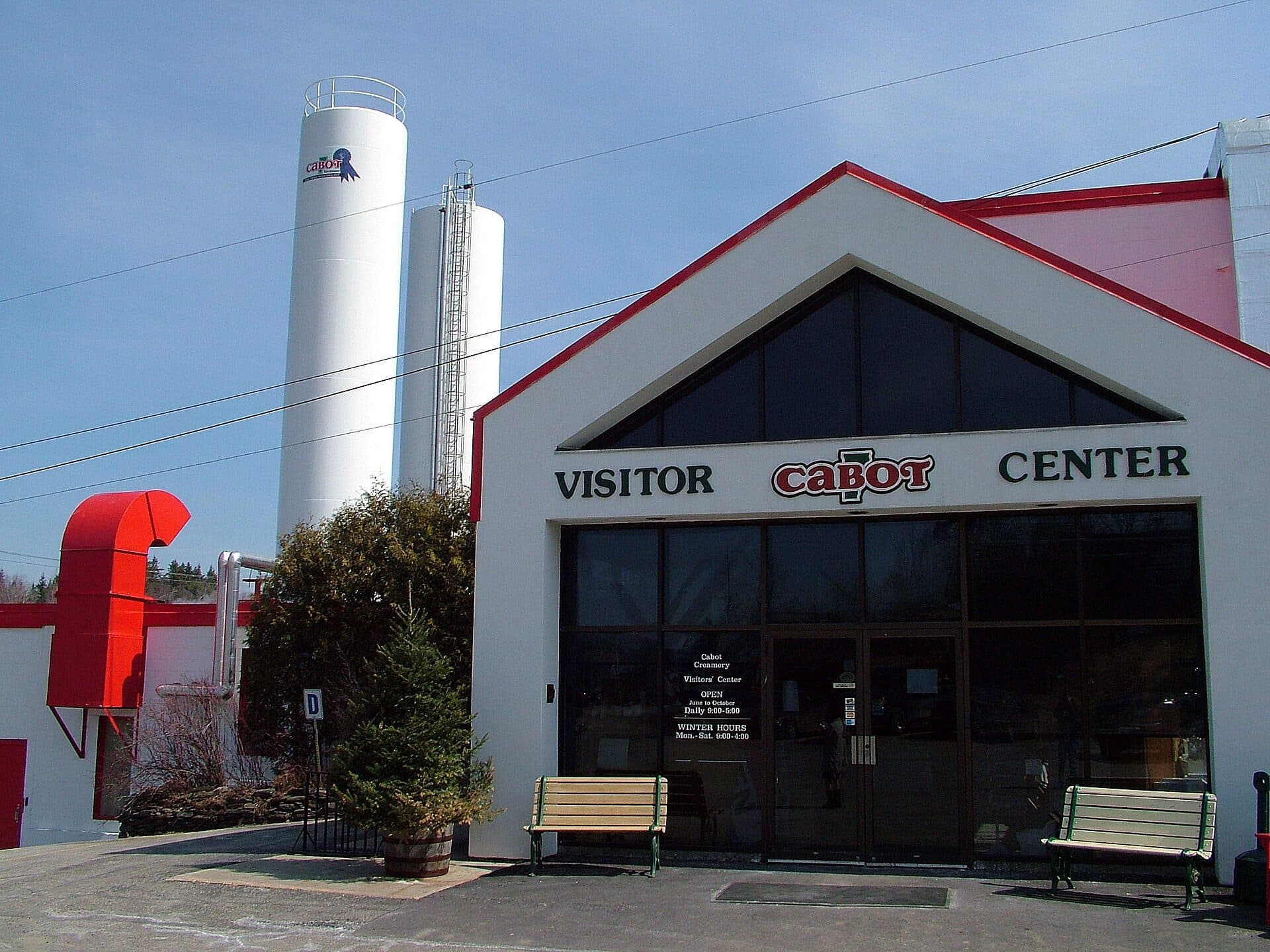
The United States has more than 65,000 cooperatives with approximately 350 million memberships — a figure that exceeds the US population because many Americans hold membership in more than one cooperative. Credit unions, electric cooperatives, and agricultural cooperatives are the dominant forms, together representing several trillion dollars in assets and hundreds of billions in annual revenue.
| Indicator | Figure |
|---|---|
| Total cooperatives | 65,000+ |
| Total memberships | 350M+ |
| Credit unions (federally insured) | 4,214 (NCUA, June 2026) |
| Credit union assets | $2.50T |
| Agricultural cooperatives | 1,620 (USDA, 2022) |
| Agricultural coop revenue | $260B+ |
| Electric cooperatives | 900 (NRECA) |
| Electric coop members | 42M |
| Electric coop service territory | 56% of US landmass |
| Largest coop by revenue | CHS Inc. ($35B) |
History of Cooperatives in the United States
The Grange Movement (1860s)
The American cooperative movement took shape in the agricultural Midwest following the Civil War. The National Grange of the Order of Patrons of Husbandry, founded in 1867, organised farmers against railroad monopolies, grain elevator operators, and equipment manufacturers who extracted maximum prices from isolated rural communities.
Grange cooperatives established purchasing societies, grain elevators, and retail stores. Most were short-lived — the first wave of farm cooperatives faced fierce opposition from incumbents and lacked the legal structure and financing to sustain operations. But the Grange created the social and political foundation for the durable cooperative institutions that followed.
Rochdale Principles and the Legal Framework
The Rochdale Principles, formulated by the English Rochdale Society of Equitable Pioneers in 1844, were adopted by American cooperative organisers in the late 19th century. These principles — one member, one vote; open membership; return of surplus to members in proportion to use — became the operational standard for US cooperatives.
State legislatures began passing cooperative incorporation statutes in the 1890s and early 1900s, giving cooperatives a legal identity distinct from corporations. By 1920, most agricultural states had some form of cooperative enabling legislation.
The Capper-Volstead Act (1922)
The Capper-Volstead Act of 1922 is the foundational piece of federal legislation for agricultural cooperatives. It specifically exempted agricultural cooperatives from antitrust laws that would otherwise prohibit farmers from collectively marketing their products. Without Capper-Volstead, the major dairy, grain, and produce cooperatives could not legally function.
The Act remains in force and covers associations of farmers, ranchers, dairymen, nut growers, and livestock producers. It requires that the cooperative deal primarily with member products and not operate for profit.
The Rural Electrification Act (1936) and the Birth of Electric Cooperatives
The Rural Electrification Act of 1936 is the single most consequential piece of cooperative legislation in American history. When President Franklin Roosevelt signed the Act, 90% of US farms had no electricity — private utilities refused to extend lines into low-density rural areas because the return on investment was too low.
The REA, administered by the newly created Rural Electrification Administration (now the USDA Rural Development's Electric Programs), made low-interest loans available to member-owned electric cooperatives to build distribution lines. Within 20 years, rural electrification was essentially complete.
The 900 electric cooperatives created under or in the wake of the REA still serve 42 million Americans across 56% of the US landmass — primarily the rural areas that private utilities never reached.
Subchapter T — The Tax Treatment of Cooperatives (1951)
Subchapter T of the Internal Revenue Code, codified in 1951 and amended several times since, is the federal tax framework for cooperatives. Its central provision is the patronage dividend deduction — cooperatives can deduct from taxable income the amounts they return to members in proportion to their patronage. This means a cooperative's income is taxed once (at the member level) rather than twice (at the corporate and member level), which is the structural tax advantage of cooperative organisation.
Cooperatives distribute surplus to members through patronage dividends (cash) and allocated equity (retained within the cooperative). Subchapter T sets the rules for how these distributions are treated for both the cooperative and its members.
Credit Unions — The Largest Cooperative Sector by Assets
Credit unions are the most asset-significant cooperative sector in the United States. As of June 2026, the country had 4,214 federally insured credit unions with combined assets of $2.50 trillion and 146.1 million members (NCUA).
Credit unions are regulated by the National Credit Union Administration (NCUA), an independent federal agency. Federal credit unions are chartered by NCUA; state-chartered credit unions are supervised by state regulators (with NCUA oversight if federally insured). Deposits are insured up to $250,000 per member by the National Credit Union Share Insurance Fund (NCUSIF), which operates similarly to FDIC insurance.
Major Credit Unions
| Credit Union | Members | Assets | Headquarters |
|---|---|---|---|
| Navy Federal Credit Union | 13.5M | $170B+ | Vienna, VA |
| State Employees' Credit Union (SECU) | 2.8M | $55B+ | Raleigh, NC |
| Pentagon Federal (PenFed) | 2.9M | $38B+ | McLean, VA |
| Boeing Employees Credit Union (BECU) | 1.4M | $29B+ | Tukwila, WA |
| Alliant Credit Union | 900,000 | $19B+ | Chicago, IL |
Navy Federal Credit Union is the world's largest credit union by assets, with $170 billion in total assets and 13.5 million members drawn from the military, Department of Defense employees, and their families. Navy Federal operates over 350 branches worldwide and offers a full range of financial products including mortgages, auto loans, credit cards, and investment accounts.
Credit unions structurally differ from banks in one key way: they return surplus to members rather than shareholders. This typically translates to lower loan rates and higher savings rates than comparable commercial banks, though scale varies significantly.
Community Development Credit Unions
Community Development Financial Institution (CDFI) credit unions specifically serve low-income and underserved communities — the same populations that commercial banks often ignore. CDFIs can apply for federal certification and access grants and subsidised capital from the CDFI Fund within the Treasury Department. Self-Help Credit Union in Durham, North Carolina, is one of the best-known examples, with $9 billion in assets and an explicit mission of serving communities denied access to mainstream finance.
Agricultural Cooperatives — Capper-Volstead Giants
The USDA counted 1,620 agricultural cooperatives in 2022 with combined net business volume of approximately $260 billion. Agricultural cooperatives in the US operate in three primary modes: marketing (selling member products), supply (buying inputs for members), and service (providing services like trucking, ginning, or drying).
CHS Inc. — America's Largest Cooperative
CHS Inc., headquartered in Inver Grove Heights, Minnesota, is the largest cooperative in the United States by revenue, generating approximately $35 billion annually. CHS is an agribusiness and energy company owned by farmers, ranchers, and their cooperatives across the country. It:
- Handles grain marketing for member farmers across the Midwest and Great Plains
- Operates the CHS Laurel refinery in Montana (producing fuel for farm and transport use)
- Manages Cenex-branded fuel and agronomy retail stores
- Provides farm supply, crop inputs, and financing
CHS is structured as an apex cooperative — many of its members are themselves local cooperatives, not individual farmers directly. This federation structure is common in American grain cooperatives.
Land O'Lakes — Dairy and Agronomy
Land O'Lakes is an agricultural cooperative with $14 billion in annual revenue and 1,700 member cooperatives representing approximately 300,000 agricultural producers. Its main businesses are:
- Dairy Foods — producing butter (the Land O'Lakes branded butter stick is the US market leader), cheese, and dairy ingredients
- Purina Animal Nutrition — feed for livestock and pets (joint venture with Nestlé Purina)
- WinField United — crop protection, seed, and precision agronomy services
Dairy Farmers of America (DFA)
Dairy Farmers of America (DFA) is the largest dairy cooperative in the United States by member count, representing approximately 11,500 dairy farmers with a combined annual milk revenue of around $18 billion. DFA markets member milk, operates cheese and butter plants, and owns branded products including Borden Cheese.
DFA's scale makes it the dominant milk buyer across much of rural America. Several antitrust investigations have examined whether DFA's market power disadvantages smaller dairy farmers — a recurring tension in agricultural cooperative governance when cooperatives grow large enough to exhibit market power.
USDA Support Programs
The USDA Rural Development office administers several programs that support cooperative formation and expansion:
- Business and Industry (B&I) Loan Guarantees — available to rural cooperatives for business development
- Rural Cooperative Development Grants (RCDG) — grants to nonprofit organisations that provide technical assistance to cooperatives
- Value-Added Producer Grants (VAPG) — help agricultural producers form marketing cooperatives and develop value-added products
Electric Cooperatives — 900 Coops, 56% of the Landmass
The National Rural Electric Cooperative Association (NRECA) represents 900 electric cooperatives serving 42 million member-consumers across 48 states. Electric cooperatives cover 56% of US landmass — effectively all rural America — but serve only about 13% of total electricity customers by count, reflecting the low population density of their service territories.
Electric cooperatives are structured differently from most other cooperatives. They are capital-intensive infrastructure businesses that require constant investment in transmission lines, substations, and grid modernisation. Member-consumers pay electricity bills, and a portion of the margin is retained as capital credits — equity in the cooperative that is eventually retired (returned to members) on a rolling cycle.
Generation and Transmission Cooperatives (G&Ts)
Distribution cooperatives — the local electric coops most people interact with — buy wholesale power from Generation and Transmission (G&T) cooperatives. There are approximately 65 G&T cooperatives in the US that own power plants and high-voltage transmission lines.
National Rural Utilities Cooperative Finance Corporation (CFC) is the financial arm of the electric cooperative system — a finance cooperative that provides low-cost capital to member electric cooperatives for infrastructure investment. CFC holds over $35 billion in assets and is owned by its electric cooperative members.
The IRA and Electric Coop Modernisation
The Inflation Reduction Act of 2022 included significant provisions for electric cooperatives, including $9.7 billion in grants (via USDA) specifically for rural electric cooperatives to transition to clean energy. This is the largest single federal investment in electric cooperative modernisation since the REA itself.
Housing Cooperatives
The United States has approximately 1.5 million housing cooperative units, with roughly 60% located in New York City. New York's concentration reflects the Mitchell-Lama program (1955), which used housing cooperatives as a middle-income affordable housing mechanism. Mitchell-Lama coops — including large complexes like Co-op City in the Bronx (15,000 apartments, 55,000 residents) — remain the largest housing cooperative complexes in the world.
Outside New York, housing cooperatives are less common than in Canada or Scandinavia. The National Association of Housing Cooperatives (NAHC) represents housing coops across the country.
Worker Cooperatives
The United States Federation of Worker Cooperatives (USFWC) represents approximately 350+ member worker cooperatives with about 8,000 worker-owners. Worker cooperatives remain a small part of the US economy but have grown steadily since the 2008 financial crisis and accelerated following the 2020 pandemic.
Concentrations of worker cooperatives exist in:
- New England — food production and distribution (Equal Exchange, the fair-trade coffee and chocolate coop based in West Bridgewater, MA)
- California — professional services, technology, and food
- Midwest — Evergreen Cooperatives (Cleveland) in laundry, greenhouse growing, and energy
Equal Exchange is the US's largest worker cooperative by revenue, with approximately $75 million in annual sales. It imports and distributes fair-trade coffee, tea, chocolate, and bananas, and is owned by approximately 170 worker-owners.
Retail and Consumer Cooperatives
REI (Recreation Equipment Inc.) is the largest consumer cooperative in the United States, with over 23 million lifetime members and $3.7 billion in annual revenue. REI sells outdoor gear and apparel and returns annual dividends to active members based on their annual purchases.
PCC Community Markets in Seattle is the largest consumer-owned food cooperative in the US by square footage, with 15 locations and over 100,000 members.
Recreational Equipment Inc. and food cooperatives like WinCo Foods (employee-owned, often confused with a consumer coop), Willy Street Co-op (Madison, WI), and the Hanover Consumer Cooperative Society (New Hampshire) together represent the consumer cooperative sector.
Federal Support and Policy Framework
NCBA CLUSA
The National Cooperative Business Association CLUSA International (NCBA CLUSA) is the national trade association for US cooperatives across all sectors. It advocates for cooperative-friendly policy, provides technical assistance, and coordinates international cooperative development programs funded by USAID.
The Cooperative Identity in Tax Law
Beyond Subchapter T, cooperatives benefit from several other federal tax provisions:
- Section 521 exempt cooperatives (primarily agricultural coops meeting strict requirements) face reduced tax rates
- Credit union tax exemption under IRC Section 501(c)(14) — credit unions are exempt from federal income tax, a long-standing provision that banks have repeatedly challenged
Frequently Asked Questions
How many cooperatives are there in the United States?
There are over 65,000 cooperatives in the US with approximately 350 million memberships. The figure exceeds the US population because many people belong to multiple cooperatives — a credit union, an electric cooperative, and perhaps a food co-op or REI simultaneously.
What is the largest cooperative in the United States?
By revenue, CHS Inc. is the largest US cooperative at approximately $35 billion annually. By assets, Navy Federal Credit Union is the largest at $170 billion. By membership, REI has 23 million lifetime members. By geographic coverage, electric cooperatives collectively serve 56% of US landmass.
What is Subchapter T?
Subchapter T (sections 1381–1388 of the Internal Revenue Code) is the federal tax treatment framework for cooperatives. Its core feature is the patronage dividend deduction — cooperatives can deduct amounts returned to members in proportion to their business patronage, meaning cooperative income is taxed once at the member level rather than twice. This is the structural tax advantage that distinguishes cooperatives from investor-owned corporations.
How are credit unions regulated in the US?
Federal credit unions are chartered and regulated by the National Credit Union Administration (NCUA), an independent federal agency. State-chartered credit unions are supervised by state regulators; most are also federally insured by NCUA. Deposits are covered up to $250,000 per member by the National Credit Union Share Insurance Fund (NCUSIF). Credit unions are exempt from federal income tax under IRC Section 501(c)(14).
What did the Rural Electrification Act do for cooperatives?
The Rural Electrification Act of 1936 funded low-interest loans to member-owned electric cooperatives to build power lines in rural areas that private utilities refused to serve. It effectively created America's electric cooperative sector. The 900 electric cooperatives operating today in the US trace their existence directly to the REA program. They now serve 42 million Americans across 56% of US landmass.
What is NRECA?
The National Rural Electric Cooperative Association (NRECA) is the trade association representing 900 electric cooperatives and their 42 million member-consumers. NRECA provides regulatory advocacy, training, safety programs, and group insurance for electric cooperative employees. It is headquartered in Arlington, Virginia.
Are there worker cooperatives in the US?
Yes. The US has approximately 350+ worker cooperatives, primarily concentrated in New England, California, and the Midwest. The US Federation of Worker Cooperatives (USFWC) is the national membership organisation. The largest worker cooperative by revenue is Equal Exchange ($75M annual sales, 170 worker-owners). Worker cooperatives are a growing but still small segment of the US economy.
What is USDA's role in cooperative development?
The USDA supports cooperative formation and expansion through several programs: Rural Cooperative Development Grants (RCDG) fund technical assistance providers; Value-Added Producer Grants (VAPG) help agricultural producers develop cooperative marketing; and Business and Industry (B&I) Loan Guarantees are available to rural cooperatives. The USDA also publishes annual agricultural cooperative statistics that are the most reliable data on the US farm cooperative sector.
Related Articles
- Cooperatives in North America — Regional Overview
- Credit Unions — Structure and Regulation
- Electric Cooperatives — How Rural Power Works
- Agricultural Cooperatives — Capper-Volstead and Beyond
- United States Country Hub
- Top Agricultural Cooperatives in the United States
- Cooperatives in Canada — North American comparison
References & further reading
This guide is researched against primary sources. Where we cite figures, they reflect the most recent data published by these organisations at the time of writing.
- 1.Cooperative resources & education — NCBA CLUSA
- 2.Cooperative Services — USDA Rural Development
Find Cooperatives Worldwide
Browse 26,000+ cooperatives by sector and country in our free directory.