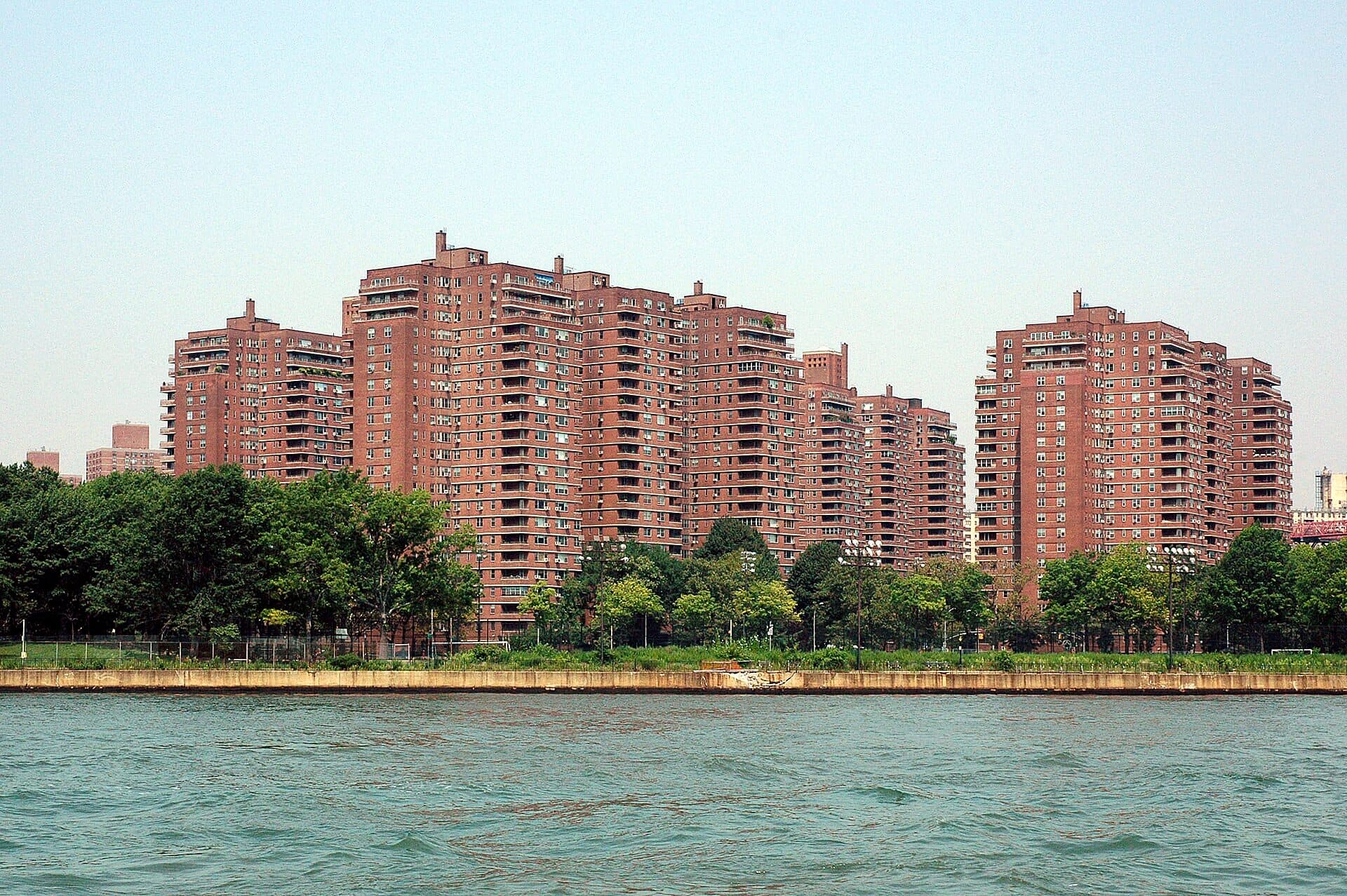
A Mitchell-Lama co-op is a New York apartment cooperative developed under the state's Mitchell-Lama housing programme. HPD describes the programme as providing affordable rental and cooperative housing to moderate- and middle-income families; it was signed into law in 1955. Buyers purchase shares and a proprietary lease at a regulated price, live in the apartment as their home, and, when they leave, sell back at a price set by programme rules rather than by the open market.
Mitchell-Lama buildings come in two types, cooperatives and rentals, and the two are easy to confuse. In a co-op you buy shares and join the corporation that owns the building. In a rental you pay rent to the building's landlord. Both are supervised by a public agency, and both are usually reached through waiting lists, which is why most of the advice below is about doing the paperwork correctly. For the wider category of regulated resident-owned housing, see housing cooperatives, and for the other big New York programme, see HDFC co-ops.
Co-op or rental: which is which
| Feature | Mitchell-Lama co-op | Mitchell-Lama rental |
|---|---|---|
| What you hold | Shares and a proprietary lease | A tenancy |
| Who you pay each month | The cooperative corporation (carrying charges) | The landlord (rent) |
| Upfront cost | Purchase price for shares, set by the programme's formula | Set by the development and your lease |
| When you leave | Sell shares back under the programme's rules | Give notice and move out |
| Income rules | Applicants must meet income limits | Applicants must meet income limits |
| How you get in | Waiting list for each building | Waiting list for each building |
Who supervises
Mitchell-Lama developments are supervised by either a state agency or the city's housing agency, depending on the building. Which one applies to a building decides where you find its waiting list and how you apply. Search results and community sites often mix the two, so confirm on the official pages below rather than a third-party summary.
- For buildings supervised by the state, the New York State Homes and Community Renewal (HCR) site carries the Mitchell-Lama programme pages and a list of state-supervised developments that shows whether each is a rental or a cooperative. HCR tells applicants to contact the management office listed for the development, because applications are made to the development rather than centrally.
- For city-supervised buildings, the Department of Housing Preservation and Development (HPD) runs a Mitchell-Lama programme page. HPD says its separate Mitchell-Lama Connect site has been decommissioned and that all Mitchell-Lama lotteries are now run on NYC Housing Connect.
Waiting lists open and close. Start from the programme pages on the HCR and HPD websites and from the building you want.
How the waiting lists work
Waiting lists are held building by building, not for the whole programme. HPD says each development requires a separate application, there is no master list, and you can apply to more than one development at a time. In practice:
- Choose buildings. Look at which developments are in the areas you want, their sizes and whether they are co-ops or rentals.
- Check whether the list is open. HPD explains that many waiting lists are closed because there are already enough applicants to fill the vacancies expected for the foreseeable future, and that these developments periodically open their lists and take new applications by lottery. For an open list, you contact the managing agent directly and ask for an application. A closed list means you check back, not that you have been refused.
- Apply to each building. Applying to one building does not put you on another list. Expect to submit income and household details; follow the official instructions and be wary of anyone who offers to sell you a place. HPD notes that a veteran living in New York State may be entitled to a preference at developments with an open waiting list.
- Keep your details up to date. HCR says you must submit an online change form to each development you have applied to, so tell each one if you move or your household changes.
- Expect priorities. HCR says that its supervised developments give preference to transfer applicants (existing residents who want to move units) for three out of every four apartments of each size that become available. That can slow the movement of the general list.
When your turn comes you are usually asked to prove your income and household size again. Income limits are tied to household size and are updated by the supervising agency, so check the current limits on the official pages instead of relying on a number from an article. HCR says that, for state-supervised developments without federal assistance, the limit is worked out from a basis (for a co-op, the annual carrying charge plus 6% of equity plus $120 per rental room) multiplied by a factor that depends on household size and on which article of the law the development was built under.
Buying an apartment
Apartment purchases are mostly done through the building's own process. For a co-op, the sale price follows a formula in the programme rules and the building's documents. Ask the building who must approve a buyer. The sale price is set by the formula, so ask the building for the figures in writing before you agree to anything. Do not pay anyone more than the official price, or pay to get a place on a waiting list. If someone asks you to, tell the supervising agency (HCR or HPD).
Costs to plan for include the share purchase price, the monthly carrying charges, any closing costs and legal fees. Ask the managing agent for a copy of the building's financial statements and the current carrying charge. Ask lenders early whether they lend on the specific building; see co-op share loans and co-op mortgages.
Selling and leaving
When you leave a Mitchell-Lama co-op, you normally sell your shares back under the programme formula, which limits what you receive. You do not get to sell on the open market. The cap is the trade-off for the lower entry price. The buyer must come from the waiting list or meet the building's rules, and the supervising agency's rules govern what the building can do.
To get a sense of how a capped resale formula changes a seller's proceeds, play with the housing co-op resale calculator. It uses a simplified limited-equity model, so use your building's own formula for the real figure.
Dissolution and privatisation
Some Mitchell-Lama developments have left the programme, which is often called "buying out" or "privatisation". HCR says developments may buy out of the programme after 20 years (35 for certain older loans), and that after a buyout rent stabilisation applies in areas covered by the Rent Stabilization Law or the Emergency Tenant Protection Act, while in other areas the buildings are no longer regulated. When a development leaves, the regulated resale and income rules can stop applying, and prices can move toward the market. That helps owners who want to sell but reduces the supply of regulated housing for future buyers. Whether and how a building can leave depends on the programme rules, the building's documents, and a decision by the shareholders and the supervising agency. If you are buying into a building, ask whether any proposal to leave the programme is under discussion, and ask a lawyer how it would affect you. If you are a resident facing a vote, read the proposal, the legal advice the board has received and the notice periods, and seek independent advice.
Some residents' groups track these changes and help owners understand their options. Treat them as a source of information, and verify what they say against the official pages.
Mitchell-Lama and other affordable co-ops
| Question | Mitchell-Lama co-op | HDFC co-op |
|---|---|---|
| Typical way in | Building waiting list or lottery | Building sale, broker or city lottery |
| Public agency | State or city agency, depending on building | Often the city's HPD |
| Resale | Programme formula | Regulatory agreement or documents |
| Where the rules live | Programme rules and building documents | Regulatory agreement and building documents |
Both are different from a market-rate co-op, where a board approves the buyer and the market sets the price. See what is a co-op apartment for how a standard co-op works and flip tax for market-rate sale charges.
Insurance
The building insures the structure. Residents still need their own policy for belongings and liability, and your lease may require it. Read about co-op apartment insurance.
Frequently asked questions
What is a Mitchell-Lama co-op?
A cooperative built under New York's Mitchell-Lama programme, where residents buy shares at a regulated price, live in the apartment and sell back under programme rules.
How do I get into a Mitchell-Lama building?
Apply to the waiting list of each building you want. For a state-supervised building, contact the management office listed by HCR. For a city-supervised building, contact the managing agent if the list is open, or enter the lottery on NYC Housing Connect when the list reopens. Start from the official HCR and HPD pages.
Is there one waiting list for all Mitchell-Lama buildings?
No. Lists are building by building, and you must apply to each separately.
How much does a Mitchell-Lama co-op cost?
It depends on the building and the programme formula. Ask the building for the current price and the monthly carrying charge, and check the financial statements.
Can I sell my Mitchell-Lama co-op at market price?
Not while the building stays in the programme. Resale is limited by the programme formula. If the building leaves the programme the position changes; get legal advice first.
What happens if my building leaves the programme?
Regulated resale and income rules can stop applying. The details depend on the programme rules and the building's documents, so ask the board and a lawyer.
Is Mitchell-Lama the same as HDFC?
No. They are separate programmes. See HDFC co-op.
Can I rent out my Mitchell-Lama co-op?
Programme rules and your lease control subletting, and it is usually restricted. Check before you assume you can.
Where to go next

References & further reading
This guide is researched against primary sources. Where we cite figures, they reflect the most recent data published by these organisations at the time of writing.
- 1.Mitchell-Lama program — NYC Department of Housing Preservation and Development
- 2.Mitchell-Lama automated waiting list system — NY State Homes and Community Renewal
Find Cooperatives Worldwide
Browse 26,000+ cooperatives by sector and country in our free directory.