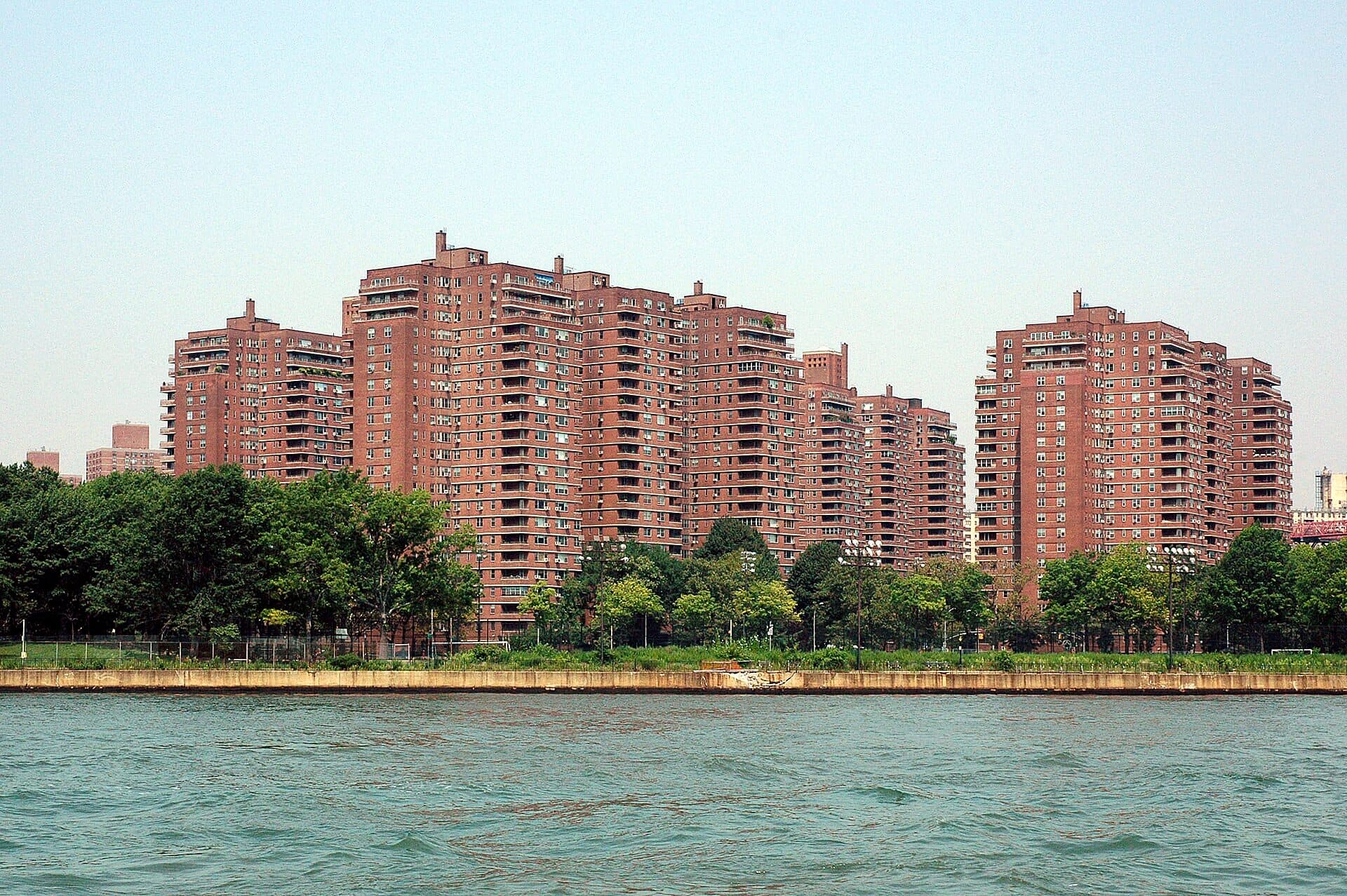
A co-op apartment is a home you live in because you own shares in the corporation that owns the whole building, not because you hold a deed to the unit. Those shares come with a proprietary lease that gives you the right to occupy one specific apartment, which is why the phrase "co-op apartment meaning" comes down to one idea: you own a share of the building and rent your home from the company you help own.
In real estate, "co-op" is shorthand for this ownership form. When an advert says an apartment is a co-op, it is telling you three things at once: you will buy shares rather than property, a board of your future neighbours will probably approve you, and you will pay a monthly charge that covers more than the upkeep of your own unit. The sections below explain each piece in plain English, compare co-ops with condos, and set out who tends to buy them and why. For the wider picture of resident-owned housing, start at our guide to housing cooperatives.
The short version
| Question | Answer for a typical co-op apartment |
|---|---|
| What do you buy? | Shares in a cooperative corporation |
| What gives you the right to live there? | A proprietary lease tied to your shares |
| Who owns the building? | The corporation, which all shareholders own together |
| Who decides if you can buy? | The board, usually after reviewing your finances |
| What do you pay each month? | A maintenance charge (sometimes called carrying charges) |
| How do you finance it? | Usually a co-op share loan, not a standard mortgage |
| What can limit resale? | Board approval of the buyer, a flip tax, sometimes price or income caps |
What you actually own
The corporation holds title to the land and the building. It may also owe money on the building through an underlying mortgage. You and your neighbours are the shareholders. The more of the building your apartment represents, the more shares you are allocated, and the allocation usually follows the size and position of the unit. Your share certificate and your proprietary lease are the two documents that matter most; together they are the thing you buy and later sell.
The proprietary lease is a lease in form but not in spirit. It does not make you a tenant of a landlord who wants to raise the rent. Instead, the lease sets out your rights to the apartment, your duty to pay maintenance, the rules for alterations and subletting, and what happens if you break the rules. The corporation's bylaws sit alongside it and set out how the board works and how shareholders vote.
Because the buildings are owned collectively, a co-op shareholder is both an occupant and a part-owner of the company that is, in effect, the landlord. Decisions about the roof, the boiler, the managing agent and the budget are made by a board elected from among the shareholders. That is the cooperative principle of democratic member control applied to a residential building, and it is the same model described in our overview of cooperative principles.
Co-op vs condo: the ownership difference
In a condo you hold title to your own unit and a share of the common parts. You can usually get a standard mortgage on it, and your sale does not normally need a vote of neighbours. In a co-op you hold shares and a lease. The practical differences run through financing, approval, monthly costs and resale. The full comparison, with a decision table, is in housing cooperative vs condo.
How buying a co-op apartment works
- Agree a price and sign a contract. The contract is conditional on board approval and, if you borrow, on the loan.
- Apply to the board. The corporation will want to see that you can carry the monthly charge. Applications typically ask for income and asset documents, and many boards then meet the applicant. What a particular board asks for varies from building to building, so ask the managing agent or your broker for that building's list.
- Arrange financing. Lenders that make loans on co-op shares have their own requirements; see co-op share loans and co-op mortgages.
- Get the board's decision. Boards in many places do not have to explain a refusal, but they must still follow fair housing law, which bars discrimination on protected grounds such as race, religion, national origin, sex, disability and familial status. Local law can add more protected categories. If you think a refusal was discriminatory, talk to a housing lawyer or your local fair housing agency.
- Close. At closing you receive the share certificate and the assigned proprietary lease. A lender, if you have one, files a notice against the shares and signs a recognition agreement with the corporation. The mechanics are covered in the share loan guide.
This is general information, not legal advice. Your contract, the building's proprietary lease and its bylaws control what happens in your purchase, so have a lawyer who handles co-op sales review them.
What the monthly charge covers
Co-op owners usually pay a single monthly maintenance charge. It is the corporation's budget divided among the shareholders, normally in proportion to shares. Typical components:
| Part of the budget | Why it is there |
|---|---|
| Payments on the underlying mortgage | The building-level debt the corporation took on to buy or improve the property |
| Property taxes | Paid by the corporation, passed through to shareholders |
| Staff, management, utilities and repairs | Running the building |
| Insurance on the building | Covers the shared structure and liability |
| Reserves | Money set aside for big repairs |
Because a slice of the building's debt and tax bill is inside your charge, the maintenance on a co-op can look high next to a condo's fee, even though the condo owner then pays property tax separately. When you compare two apartments, compare the total monthly cost, not the headline fee alone. A building with a large underlying mortgage and little in reserves can raise charges or levy assessments later, so ask for the building's financial statements before you commit.
Co-op shareholders in the United States may be able to deduct their share of the corporation's deductible real estate taxes and mortgage interest, if they itemise and the corporation meets the tests in section 216 of the Internal Revenue Code (for example, that at least 80% of its gross income comes from its tenant-stockholders). Your share is worked out from your shares as a fraction of all shares, and the corporation generally tells you your share of its real estate tax. IRS Publication 530 explains the rules; ask a tax adviser how they apply to you.
Insurance for a co-op apartment
The building's master policy covers the structure and the corporation's liability. It does not cover your belongings, any improvements you made inside, or your personal liability. Co-op owners generally buy their own policy for contents, interior improvements, liability and loss of use. Our page on cooperative insurance explains what that policy covers and how to compare quotes. Your proprietary lease may state a minimum cover, so check it before you shop.
Selling a co-op apartment
You sell your shares and assign your lease to the buyer. The buyer goes through the same board approval you did. Three things can sit between you and your proceeds:
- Board approval of the buyer. If the board turns down a buyer, the sale falls through and you start again.
- A flip tax. Many buildings charge a transfer fee, set by the building's documents, when shares are sold. See flip tax in a co-op.
- Resale restrictions. Some co-ops are not market-rate. Limited-equity, HDFC and Mitchell-Lama co-ops cap the price or the buyer's income. See HDFC co-ops and Mitchell-Lama co-ops, and try the limited-equity resale calculator.
Who buys co-ops and why
Co-ops appeal to different buyers for different reasons, and it is worth being honest about which group you are in.
| Buyer | Why a co-op can suit them | What to watch |
|---|---|---|
| Owner-occupiers who plan to stay | Can be priced below a comparable condo in markets with many co-ops; shared governance of the building | The board's approval and the building's finances matter more than in a condo |
| Buyers in cities where co-ops are common | In New York City, the 2023 Housing and Vacancy Survey counted about 450,800 occupied co-op units, so a co-op may be the only way to buy in the area you want | Fewer lenders, tighter rules |
| Households who want a stake in the building's decisions | Shareholders vote and can stand for the board | Time and responsibility |
| Buyers of affordable co-ops | Resale rules keep the price within reach of the next buyer | Lower profit on sale by design |
| Investors | Rarely suited: many co-ops restrict subletting or ban it, and board approval applies to any buyer | Check the sublet rules in the proprietary lease before you buy |
Prices differ by city and building, so do not rely on a rule of thumb about the "co-op discount". Compare recent sales of co-ops and condos in the same neighbourhood, and weigh the saving, if any, against the extra approval step and the narrower pool of buyers when you sell.
Questions to ask before you offer
- What does the maintenance charge cover, and what has it done over the last few years?
- How large is the underlying mortgage, when does it fall due, and is there a balloon payment?
- What are the building's reserves, and are any assessments planned?
- What are the rules on subletting, pets, renovations and pied-a-terre use?
- Is there a flip tax, and who pays it?
- What share of apartments is owner-occupied, and does the building have a lender-friendly financial profile?
- Is the co-op market-rate or restricted by an agreement with a public body?
Frequently asked questions
What does co-op mean in real estate?
It means the building is owned by a cooperative corporation and residents hold shares plus a proprietary lease instead of a deed. The word "co-op" in a listing is a signal about the ownership form, so the buying process, the financing and the monthly charge all follow the co-op pattern.
Is a co-op apartment the same as a condo?
No. A condo owner holds title to a unit. A co-op owner holds shares in a corporation and a lease on a unit. That difference leads to different approval rules, financing and resale. See the side-by-side table in housing cooperative vs condo.
Can I get a normal mortgage on a co-op apartment?
Usually you borrow with a co-op share loan, secured by your shares and lease rather than by real property. Many lenders still describe it as a co-op mortgage. The differences are explained in co-op share loan and co-op mortgage.
Who approves the purchase of a co-op apartment?
The cooperative's board, which is elected by the shareholders. Its powers and process come from the bylaws and proprietary lease. Boards must still comply with fair housing law, and a refusal that is really discrimination can be challenged.
Do co-op owners pay property tax?
The corporation pays the property tax on the whole building and recovers it through maintenance. Shareholders do not usually receive a separate property tax bill for their unit. Whether you can deduct part of your charge on a US tax return depends on your situation; ask a tax adviser.
Can I rent out my co-op apartment?
Only as far as your proprietary lease and the board allow. Many co-ops limit subletting by length of time, require board consent or charge a fee, and some prohibit it. Read the sublet clause before you buy if you may ever need to rent the unit out.
Do I need insurance for a co-op apartment?
The building insures the structure, but your belongings, interior improvements and personal liability are normally yours to insure, and the lease may require it. See cooperative insurance.
Are all co-op apartments market-rate?
No. Some are limited-equity or government-regulated co-ops with caps on price or buyer income, such as HDFC co-ops and Mitchell-Lama co-ops in New York. Those cap what you can sell for in exchange for a lower entry price.
Where to go next


References & further reading
This guide is researched against primary sources. Where we cite figures, they reflect the most recent data published by these organisations at the time of writing.
- 1.Cooperative identity, values & principles — International Cooperative Alliance
- 2.Cooperative resources & education — NCBA CLUSA
Find Cooperatives Worldwide
Browse 26,000+ cooperatives by sector and country in our free directory.