
Consumer Cooperatives: Customer-Owned Businesses Explained
A consumer cooperative is a business owned and governed by the people who use its goods or services. Unlike investor-owned corporations where shareholders pursue maximum returns, consumer co-ops exist to serve their members' interests — delivering quality products at fair prices while returning surplus revenue to the people who generated it. This model spans grocery stores, credit unions, insurance mutuals, electric utilities, and outdoor retailers, touching the daily lives of hundreds of millions of people worldwide.
Consumer cooperatives are one of the most widespread types of cooperatives, and they operate under the same foundational cooperative principles that have guided the movement since the Rochdale Pioneers opened their store in 1844.
What Is a Consumer Cooperative?
A consumer cooperative is a cooperative formed by individuals who pool their purchasing power and collectively own the business that supplies them. Members are simultaneously customers and owners. They elect a board of directors, share in the economic results of the business, and have a direct voice in how it operates.
The defining feature is alignment of incentives. In an investor-owned retailer, the goal is to maximise profit extracted from customers. In a consumer co-op, the customers are the owners, so the goal shifts toward delivering value — through lower prices, higher quality, better service, or direct cash returns called patronage dividends.
This structure dates back to the earliest days of the cooperative movement. The Rochdale Society of Equitable Pioneers, founded in 1844 in northern England, was a consumer cooperative — 28 weavers pooling resources to buy food and household goods at honest weights and fair prices. Their rules became the blueprint for the global cooperative movement. You can read the full story in the history of cooperatives.
How Consumer Cooperatives Work
Membership and Equity
Joining a consumer co-op typically requires purchasing a membership share. The cost varies widely. At REI, a lifetime membership costs $30. At the Park Slope Food Coop in Brooklyn, new members pay a $25 investment plus a $100 refundable deposit. Some cooperatives charge annual dues instead of a one-time fee.
This share represents the member's equity stake in the business. Unlike corporate stock, co-op shares generally do not appreciate in value and cannot be traded on secondary markets. Their purpose is to capitalise the business and establish the member's ownership rights, not to serve as a speculative investment.
One Member, One Vote
Consumer cooperatives follow the democratic principle of one member, one vote. A member who spends $50,000 per year at the co-op has exactly the same governance power as a member who spends $500. This stands in direct contrast to corporations, where voting power is proportional to share ownership.
Members exercise their vote by electing a board of directors, approving bylaw changes, and weighing in on major business decisions at annual meetings. In practice, voter turnout at co-op elections tends to be modest — typically between 10% and 30% of the membership — but the structural guarantee of democratic control remains a core differentiator.
Patronage Dividends
When a consumer cooperative earns surplus revenue beyond its operating costs and reserve requirements, it distributes that surplus back to members in proportion to their purchases. These distributions are called patronage dividends (sometimes patronage refunds or member dividends).
REI provides a well-known example. The co-op returns roughly 10% of eligible purchases to members as an annual dividend. In 2023, REI distributed $236 million in member dividends — a figure that reflects the scale of its 22.9 million active members and $3.7 billion in revenue.
Patronage dividends are not guaranteed. They depend on the co-op's financial performance in a given year, and the board decides what proportion of surplus to distribute versus retain for reinvestment. During lean years, dividends may be reduced or suspended entirely. REI, for instance, suspended its dividend in 2020 due to pandemic-related financial pressure, then reinstated it in 2021.
Governance Structure
The standard governance model involves three layers:
Members — the owners and customers, who vote at annual meetings and elect the board.
Board of Directors — elected volunteers (in most consumer co-ops, directors are unpaid or receive modest stipends) who set strategy, approve budgets, and hire the CEO or general manager.
Management — professional staff who handle day-to-day operations, purchasing, and personnel.
Some consumer cooperatives layer in additional democratic mechanisms. The Park Slope Food Coop requires every adult member to work a 2-hour and 45-minute shift every four weeks. This labour requirement keeps prices low (Park Slope's prices run roughly 20-40% below typical New York grocery stores) and deepens members' connection to the business.
Types of Consumer Cooperatives
Consumer cooperatives appear across a wide range of industries. The common thread is always the same: the customers own the business.
Retail and Grocery Cooperatives
Food co-ops are the most recognisable consumer cooperatives in North America. The National Cooperative Grocers (NCG) network includes over 200 food co-ops operating more than 230 stores across the United States. These range from small single-store operations to multi-location retailers.
The Park Slope Food Coop in Brooklyn, New York, is perhaps the most famous American food co-op. Founded in 1973, it has roughly 17,000 members and generates over $60 million in annual revenue from a single 6,000-square-foot store. Its work requirement model is unusual but effective — it operates with only about 80 paid employees, with the rest of the labour provided by members.
Outside of groceries, REI (Recreational Equipment, Inc.) demonstrates that consumer cooperatives can compete at national scale. Founded in 1938 by a group of Pacific Northwest mountaineers who wanted access to quality ice axes, REI has grown into the largest consumer cooperative in the United States with 22.9 million active members, 181 stores, and $3.7 billion in annual revenue as of 2023.
Credit Unions
Credit unions are consumer cooperatives that provide financial services. Depositors are the members and owners. In the United States alone, federally insured credit unions have 146.1 million members (NCUA, June 2026).
Navy Federal Credit Union, the largest in the US, serves over 13 million members with more than $170 billion in assets. USAA, which serves military families, manages over $200 billion in assets across its banking and insurance operations.
Credit unions typically offer higher savings rates and lower loan rates than commercial banks because they return surplus to members rather than outside shareholders. For a full comparison, see credit union vs bank: is it a better deal?. The National Credit Union Administration (NCUA) insures deposits at federally insured credit unions up to $250,000, the same coverage as FDIC-insured banks.
Insurance Mutuals
Mutual insurance companies are consumer cooperatives where policyholders are the owners. Some of the world's largest insurers operate on this model, including State Farm, Nationwide, Liberty Mutual, and USAA in the United States, and Groupe MACIF and MAIF in France.
When a mutual insurer generates surplus, it can reduce premiums, increase reserves, or pay policyholder dividends. This alignment of interests — the company's owners are the people it insures — removes the structural tension between maximising underwriting profit and paying claims fairly.
Utility Cooperatives
Rural electric cooperatives serve over 42 million Americans across 56% of the US landmass. While these cooperatives primarily serve rural areas, their collective scale is significant — more than 900 distribution co-ops purchase power from 63 generation and transmission cooperatives.
Telephone cooperatives, water cooperatives, and broadband cooperatives follow the same model, bringing essential infrastructure to communities that investor-owned utilities may find unprofitable to serve.
Purchasing Cooperatives
Purchasing cooperatives (sometimes called buying cooperatives) allow independent businesses or individuals to aggregate their buying power. Hardware store cooperatives like Ace Hardware and True Value operate on this model — independently owned stores join the cooperative to access bulk purchasing, shared marketing, and distribution infrastructure.
While purchasing cooperatives can serve businesses rather than individual consumers, many function as hybrid consumer/business co-ops where the end beneficiary is the retail customer who gets better prices and product selection.
Major Consumer Cooperatives Worldwide
Consumer cooperatives operate at massive scale in many countries. Here are some of the most significant:
Migros (Switzerland) — Founded in 1925, Migros is Switzerland's largest retailer and the country's largest private employer with over 100,000 staff. It holds approximately 22% of the Swiss retail food market. Migros operates as a federation of 10 regional cooperatives with a combined membership of over 2 million — in a country of 8.8 million people.
The Co-operative Group (UK) — The direct descendant of the Rochdale Pioneers' tradition, the Co-op Group is the UK's largest consumer cooperative with over 4.5 million active members. It operates more than 2,400 food stores alongside funeral care, insurance, and legal services businesses. In 2023, it reported revenue exceeding 11 billion pounds.
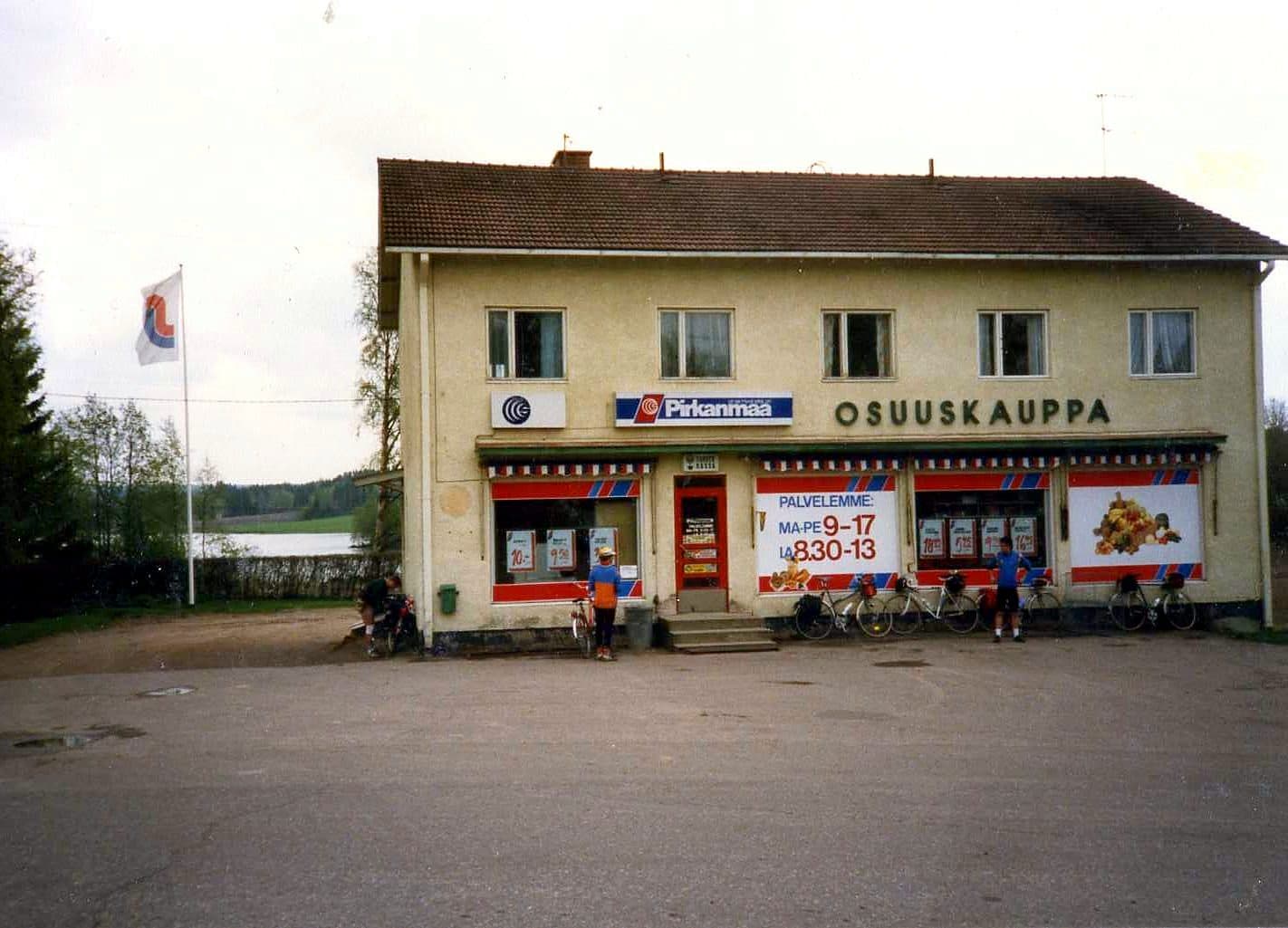
S Group (Finland) — A network of 19 regional cooperatives and SOK Corporation (their central body), S Group is Finland's largest retailer with over 1,800 outlets and a roughly 46% share of the Finnish daily consumer goods market. More than 2.4 million Finns are S Group members — in a country of 5.6 million.
Coop (Italy) — The largest supermarket chain in Italy, Coop operates over 1,100 stores through a network of consumer cooperatives. It holds approximately 12% of the Italian grocery market with more than 6 million members.
MEC / Mountain Equipment Company (Canada) — Originally Mountain Equipment Co-op, MEC was a beloved Canadian outdoor retailer modelled on REI. However, its story also serves as a cautionary tale — in 2020, facing financial difficulties exacerbated by the pandemic, MEC was sold to a private investment firm through a court-supervised process. The sale sparked significant controversy and member backlash, raising difficult questions about cooperative governance and the vulnerability of co-ops during financial distress.
Seikatsu Club (Japan) — A consumer cooperative focused on direct purchasing from producers, Seikatsu Club has roughly 410,000 member households across Japan. It pioneered the concept of "collective purchasing" where neighbourhood groups place joint orders for food and household goods.
Economics of Consumer Cooperatives
Bulk Purchasing Power
The fundamental economic advantage of a consumer cooperative is aggregated demand. When thousands or millions of members buy through a single entity, the cooperative negotiates better wholesale prices, logistics, and terms than any individual member could achieve alone.
This principle works identically to how Costco or Walmart leverage their scale — but with a structural difference in where the savings flow. In an investor-owned retailer, purchasing efficiencies translate into margins captured by shareholders. In a consumer co-op, those efficiencies flow back to the members through lower prices, patronage dividends, or reinvestment in services.
Capital Structure
Consumer cooperatives face a persistent structural challenge around capital. Because co-op shares do not appreciate and cannot be traded, they do not attract investment capital the way corporate equity does. Co-ops must fund growth primarily through retained earnings (undistributed surplus), member equity (shares and fees), and debt.
This limits the speed at which consumer cooperatives can expand compared to investor-backed competitors. REI's growth over 85 years to 181 stores is impressive but modest next to corporations that can raise billions through IPOs or venture capital and open hundreds of locations in a few years.
Some cooperatives have experimented with preferred shares or member loan programmes to supplement their capital base, but the fundamental constraint remains: co-ops must grow largely from the wealth they generate internally.
Member Economics
From an individual member's perspective, the economics often work out favourably. Consider a member who spends $2,000 annually at REI and receives a 10% dividend — that $200 return exceeds what most rewards credit cards deliver. Food co-op members typically benefit from prices 10-30% below conventional grocery competitors, particularly on organic and specialty products.
Credit union members benefit through the interest rate differential. The National Credit Union Administration reports that credit unions consistently offer auto loan rates 0.5-1.5 percentage points below bank averages and savings rates 0.1-0.5 points above — differences that compound meaningfully over time.
Consumer Cooperative vs Franchise: A Comparison
Consumer cooperatives and franchises both involve networks of locations operating under a shared brand, but the ownership structure and incentive alignment differ fundamentally.
| Dimension | Consumer Cooperative | Franchise |
|---|---|---|
| Ownership | Customers own the business collectively | Franchisor owns the brand; franchisees own individual locations |
| Profit flow | Surplus returns to members as patronage dividends | Profits flow to franchisees and franchisor (via royalties) |
| Governance | One member, one vote | Franchisor sets rules; franchisees have limited input |
| Pricing goal | Lowest sustainable price for members | Maximise revenue per transaction |
| Capital source | Member equity + retained surplus + debt | Franchisee investment + franchisor capital |
| Brand control | Board sets brand standards democratically | Franchisor dictates brand standards contractually |
A consumer co-op like REI and a franchise like Dick's Sporting Goods may look similar from the outside — both are national retail chains selling outdoor gear. But the underlying logic is reversed. REI exists to serve its members' purchasing needs; Dick's exists to generate returns for its shareholders. Neither model is inherently superior, but they optimise for different outcomes.
Challenges Facing Consumer Cooperatives
Consumer cooperatives face several structural challenges that set them apart from investor-owned competitors. Understanding these is essential for anyone considering starting or joining a co-op. For a broader analysis, see the advantages and disadvantages of the cooperative model.
Capital constraints. As discussed above, the inability to raise equity capital through public markets limits growth velocity. When Amazon or Walmart enters a market with billions in capital, co-ops cannot simply match their spending on logistics, technology, or store expansion.
Governance complexity. Democratic governance is a strength in principle but can create operational friction. Board elections, member meetings, bylaw amendments, and consensus-building all take time and energy. When decisions need to be made quickly — during a pandemic, a competitive threat, or a financial crisis — the democratic process can slow response times.
Member engagement. Most consumer co-ops struggle with low member engagement. Many members join for the economic benefits (dividends, discounts) without participating in governance. This creates a gap between the cooperative's democratic ideal and its operational reality, and it can leave governance in the hands of a small, unrepresentative group of active members.
Scale and technology. Large investor-owned retailers invest heavily in supply chain technology, data analytics, e-commerce platforms, and delivery infrastructure. Individual co-ops often lack the resources to match these investments. Cooperative federations and shared service organisations (like NCG for grocery co-ops) help bridge this gap, but the technology deficit remains a competitive vulnerability.
Generational relevance. Many consumer cooperatives built their membership base among Baby Boomers and Gen X consumers drawn to the cooperative movement's values. Attracting younger members who may default to Amazon Prime or Instacart for convenience requires co-ops to invest in digital experiences and communicate their value proposition in new ways.
The MEC cautionary tale. Mountain Equipment Company's 2020 sale to a private firm demonstrated that cooperatives are not immune to financial distress and that member ownership does not automatically prevent loss of cooperative identity. MEC's experience has prompted other co-ops to examine their governance structures, financial resilience, and succession planning more carefully.
Starting or Joining a Consumer Cooperative
For individuals interested in the consumer cooperative model, the entry points are straightforward:
Joining an existing co-op usually requires nothing more than purchasing a membership share. Most food co-ops, credit unions, and retail co-ops like REI welcome new members with minimal barriers. Check whether co-ops in your area have open membership (most do, as open membership is one of the core cooperative principles).
Starting a new consumer cooperative requires a group of potential members who share a common purchasing need that is not being adequately met by existing businesses. For formal registration steps, see how to register a cooperative. The process typically involves:
- Identifying the unmet need and assembling a core organising group
- Conducting a feasibility study (market research, financial projections, site analysis)
- Drafting articles of incorporation and bylaws under your state or country's cooperative statute
- Raising initial capital through membership shares and, if needed, member loans or grants
- Securing a location, hiring staff, and launching operations
Cooperative development centres exist in most US states and many countries to guide new co-ops through this process. The University of Wisconsin Center for Cooperatives and the NCBA CLUSA are well-regarded national resources. See also the full how to start a cooperative guide.
The cooperative model works best when members share a genuine common interest and when the market presents an opportunity that collective action can address more effectively than individual purchasing. Grocery co-ops thrive in communities underserved by conventional retailers. Credit unions thrive among groups with shared professional or community bonds. Understanding where collective purchasing power creates real value is the first step.
Relationship to Other Cooperative Models
Consumer cooperatives are one piece of a broader cooperative ecosystem. Where consumer co-ops organise buyers, worker cooperatives organise employees as owners of their workplace. Agricultural cooperatives organise farmers to collectively market crops, purchase inputs, and process goods. Housing cooperatives organise residents as collective owners of their buildings.
Some cooperatives blend models. A grocery store could be structured as a multi-stakeholder cooperative where both consumers and workers share ownership. These hybrid models are growing in popularity, particularly in Europe, as they address the criticism that consumer co-ops sometimes prioritise low prices at the expense of worker wages and conditions.
Frequently Asked Questions
What is the difference between a consumer cooperative and a regular store?
A consumer cooperative is owned by its customers, who each get one vote in governance decisions regardless of how much they spend. A regular store is owned by private investors or shareholders whose primary interest is maximising profit. In a co-op, surplus revenue is returned to members as patronage dividends or reinvested in lower prices and better services. In a conventional retailer, profits go to shareholders.
Do you have to be a member to shop at a consumer cooperative?
Most consumer cooperatives allow non-members to shop, though members typically receive better prices, patronage dividends, and voting rights. Some co-ops, like the Park Slope Food Coop, restrict shopping to members only. Credit unions generally require membership to access their financial services.
How do patronage dividends work?
At the end of each fiscal year, the cooperative's board calculates the surplus (revenue minus expenses and reserves). A portion of this surplus is distributed to members in proportion to how much each member purchased during the year. For example, if the co-op declares a 5% patronage dividend and you spent $4,000, you would receive $200. Dividends may be paid in cash, store credit, or additional equity in the cooperative.
Are consumer cooperatives more expensive than conventional stores?
Not necessarily. Many food co-ops offer prices competitive with or lower than conventional grocery chains, particularly on organic, bulk, and local products. The Park Slope Food Coop's member-labour model enables prices 20-40% below typical New York City grocery stores. Credit unions consistently offer better interest rates than commercial banks. REI's prices are comparable to other outdoor retailers, but the 10% member dividend effectively reduces the net cost.
Can a consumer cooperative fail?
Yes. Consumer cooperatives face the same market risks as any business — competition, changing consumer preferences, poor management, and economic downturns. The 2020 sale of MEC (Mountain Equipment Company) in Canada is a notable example of a consumer cooperative that encountered financial distress and ultimately lost its cooperative identity. Strong governance, adequate capitalisation, and engaged membership reduce but do not eliminate these risks.
Explore Further
- What Are Cooperatives? — The foundational overview of cooperative businesses
- Types of Cooperatives — The full taxonomy from consumer to worker to producer
- Cooperative Principles — The seven internationally recognised principles
- History of Cooperatives — From Rochdale to the modern global movement
- Worker Cooperatives — When employees own the business
- Agricultural Cooperatives — Farmer-owned cooperative enterprises
- Housing Cooperatives — Resident-owned housing
- Electric Cooperatives — Member-owned rural utilities
- Advantages and Disadvantages — Honest assessment of the cooperative model
- Food Cooperatives — Community-owned grocery stores and food hubs
- Banking Cooperatives — Credit unions and cooperative banks
- Cooperative Software — Tools for managing member records and governance


References & further reading
This guide is researched against primary sources. Where we cite figures, they reflect the most recent data published by these organisations at the time of writing.
- 1.Cooperative identity, values & principles — International Cooperative Alliance
- 2.The 7 Cooperative Principles — NCBA CLUSA
Continue Reading
Find Cooperatives Worldwide
Browse 26,000+ cooperatives by sector and country in our free directory.