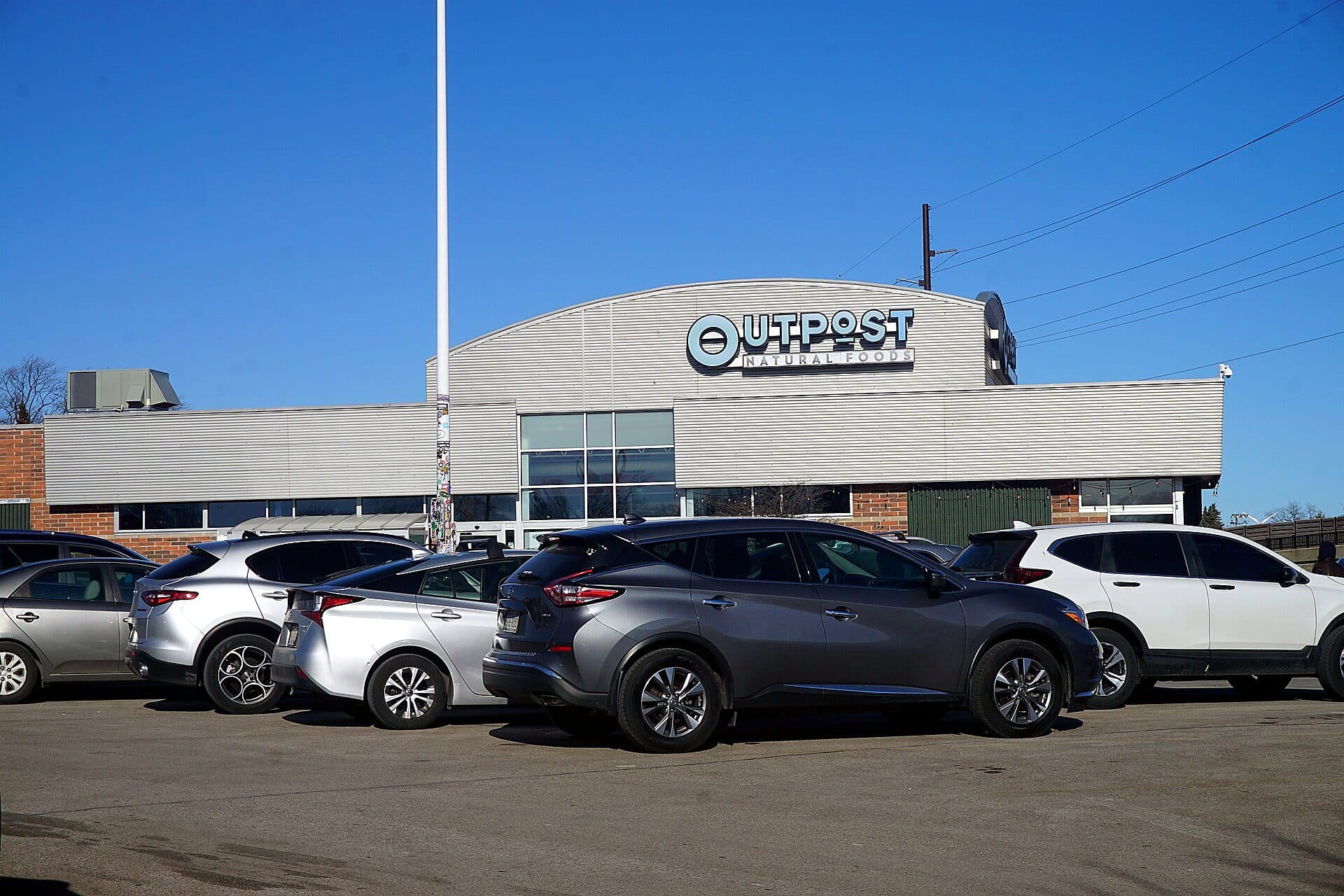
Food Cooperatives: Community-Owned Food Stores & Buying Clubs
A food cooperative is a grocery store, buying club, or food distribution business owned and governed by its members. Those members are the people who shop there. They elect the board, approve major decisions, and receive a share of any surplus the business generates. When a food co-op does well, its members benefit directly — through lower prices, patronage refunds, or reinvestment in the store they depend on.
Food cooperatives are a specific subset of consumer cooperatives, and they operate under the same foundational cooperative principles that have shaped the global cooperative movement since the 1840s. But food co-ops have a distinct character. They tend to prioritise local sourcing, organic and minimally processed products, supply chain transparency, and community relationships in ways that conventional supermarkets rarely match.
The 148 food co-ops affiliated with National Co+op Grocers (NCG) generate more than $2.5 billion in combined annual sales — a scale that commands serious attention from food industry suppliers and gives member stores real buying power without sacrificing local ownership.
What Is a Food Cooperative?
A food cooperative is a cooperative formed by people who want collective ownership and control over their food supply. The simplest version is a buying club — a group of households that pool an order each week to access wholesale prices on bulk goods. The most complex version is a full-service grocery store with departments, paid staff, a deli counter, and a wine section, owned and controlled by thousands of member-households.
What makes the model a cooperative rather than simply a community-owned business is adherence to the principles established by the International Co-operative Alliance. Members have democratic control (one member, one vote), they participate in the economic results, they admit new members on open and voluntary terms, and the organisation is independent of government or corporate control. The full set of principles is covered in cooperative principles.
The economic logic is straightforward. A conventional supermarket is designed to extract margin from shoppers on behalf of distant shareholders. A food cooperative is designed to serve its members' interests, which means sourcing food they actually want, at prices that reflect cost rather than profit maximisation, with any surplus returned to members rather than to Wall Street.
How Food Co-ops Work
Membership and Member-Owners
Most food co-ops require a one-time or annual membership fee — typically between $10 and $200 depending on the co-op's structure. This equity investment gives members ownership rights: voting in board elections, attending annual meetings, accessing member-only pricing, and receiving patronage dividends when the co-op runs a surplus.
The membership fee is usually refundable if a member leaves, though co-ops vary on whether they pay it back immediately or defer it. Some co-ops allow members to pay in instalments to lower the barrier to entry.
At larger co-ops like Willy Street Co-op in Madison, Wisconsin, membership runs around $58 one-time and opens access to lower shelf prices on top of the standard member patronage dividend. Non-members can still shop, often at a slight markup.
Working Hours: The Park Slope Model
Park Slope Food Coop in Brooklyn is the largest and most famous food co-op in the United States, with approximately 17,000 member-households. It was founded in 1973 and operates on a working membership model that is unusual even among food co-ops.
Every member is required to work one 2-hour and 45-minute shift every four weeks. This labor contribution — roughly 70,000 hours of member work per month — is what allows Park Slope to price groceries 20 to 40 percent below comparable NYC prices while maintaining a $9 million payroll for its paid staff. The co-op has around 250 paid employees, but member labor handles much of the stocking, checkout, childcare, and office administration.
Fail to show up for your shift and you enter a suspension cycle. Work through it or make it up, and you stay in good standing. The requirement creates a genuine community — members know each other, understand the business, and take the co-op's performance personally because they built it.
Most food co-ops do not require working hours. Park Slope is exceptional in its scale and its labor model, though a handful of smaller buying clubs operate on similar principles.
Governance
Food co-ops are governed by a board of directors elected by the membership. Boards typically meet monthly, set policy, hire and evaluate the general manager, and approve budgets. Operational decisions are delegated to management; strategic and financial decisions rest with the board. For a detailed look at how cooperative boards and member voting work, see cooperative governance.
Annual member meetings are the formal exercise of democratic control. Members vote on board candidates, bylaw amendments, and major strategic proposals. Many food co-ops actively encourage member engagement through committees — purchasing advisory groups, community outreach teams, member-worker coordination.
The governance model can feel slow compared to a privately owned store that can change its product range in a week. That is a real operational challenge, discussed further in the Challenges section. But it is also the source of the co-op's legitimacy and accountability — the community owns it, and the community decides.
Surplus Sharing
When a food co-op generates revenue above its costs, the surplus belongs to its members. Co-ops distribute this in two main ways:
Patronage refunds allocate surplus in proportion to how much each member spent during the year. If a co-op earns a $500,000 surplus and you spent 1% of total member purchases, you receive $5,000. In practice, patronage refunds are usually modest — a few percent of annual purchases — because most co-ops reinvest heavily in the business.
Retained earnings fund store improvements, reserve funds, and new services. A co-op that consistently retains earnings can expand, renovate, or weather a bad year without taking on debt or diluting member equity.
Some co-ops issue a combination: a cash portion paid out directly, and a retained portion credited to each member's equity account that is paid out over several years.
Types of Food Cooperatives
Full-Service Grocery Co-ops
These are complete grocery stores owned by member-consumers. They look like conventional supermarkets from the outside — produce section, meat counter, packaged goods, deli — but they are governed by members and distribute surplus back to the community. Willy Street Co-op in Madison and Bellingham Food Co-op in Washington State are strong examples of this model.
Buying Clubs
A buying club is the simplest form of food cooperative. A group of households — often 10 to 50 families — pool orders to buy directly from a wholesaler or distributor at prices unavailable to individual shoppers. Members take turns coordinating orders, picking up pallets, and dividing inventory. There is no storefront, no paid staff, and minimal overhead. The savings are real but the time commitment is significant.
Buying clubs often evolve into full co-ops as membership grows and the operational complexity increases enough to justify a physical space and paid management.
Food Hubs
A food hub is a cooperative (or cooperative-adjacent) organisation that aggregates, processes, and distributes local food from multiple small producers to institutional buyers — schools, hospitals, restaurants, and retail stores. Food hubs function more like agricultural marketing cooperatives than consumer co-ops, but many are structured as hybrid models with both producer and consumer members.
Distribution Co-ops
Equal Exchange is the canonical example: a worker-owned cooperative that acts as a wholesaler, importing Fairtrade coffee, tea, chocolate, and other goods from small-farmer cooperatives in the Global South and distributing to food co-ops, religious organisations, and natural food stores across the US. Equal Exchange does not sell directly to consumers; its customers are organisations, and it is owned by its worker-members rather than its consumer-members.
The National Co+op Grocers network itself functions partly as a distribution and services cooperative — aggregating the buying power of 148 member co-ops to negotiate better pricing from national suppliers.
Food Co-op vs Conventional Supermarket
| Factor | Food Co-op | Conventional Supermarket | Whole Foods (Amazon) |
|---|---|---|---|
| Ownership | Member-consumers | Shareholders / private equity | Amazon shareholders |
| Profit distribution | Patronage dividends to members | Dividends to investors | Amazon consolidated |
| Governance | One member, one vote | Proportional to shares | Corporate hierarchy |
| Sourcing priorities | Local, organic, transparent supply chains | National suppliers, lowest cost | National + premium brands |
| Pricing | Often competitive; member discounts | Category dependent | Premium (pre-Amazon) to mainstream |
| Community accountability | High — members vote and attend meetings | Low | Very low |
| Typical membership | $10–$200 one-time | Not applicable | Prime ($139/yr, optional discount) |
| Surplus use | Reinvested or returned to members | Paid to investors | Amazon corporate allocation |
Major Food Cooperatives and Networks
Park Slope Food Coop (Brooklyn, NY) — Founded 1973, approximately 17,000 member-households, one of the largest member-owned food cooperatives in the world. Operating on a working membership model where each member contributes one shift every four weeks, the co-op prices groceries 20 to 40 percent below comparable New York City supermarket prices. It operates a single location but has become a model for participatory co-op governance globally.
Willy Street Co-op (Madison, WI) — Founded 1974, grown from a buying club to three locations with combined annual sales well above $70 million. Willy Street is notable for having grown beyond a single-store operation while maintaining the working cooperative culture, including an active member services committee and annual member surveys.
Weaver Street Market (Carrboro and Chapel Hill, NC) — A multi-stakeholder cooperative with both consumer members and worker members, Weaver Street was an early example of hybrid membership structures that give voice to employees alongside shoppers.
Bellingham Food Co-op (Bellingham, WA) — One of the larger standalone food co-ops in the Pacific Northwest, with deep roots in the local food movement and strong sourcing relationships with regional farmers.
Rainbow Grocery (San Francisco, CA) — A worker cooperative rather than a consumer cooperative, Rainbow is owned entirely by its employees and specialises in natural and organic foods. It demonstrates that the cooperative model in food retail is not limited to consumer ownership — workers can own their grocery store too.
National Co+op Grocers (NCG) — Not a store but a business services cooperative for food co-ops. NCG currently serves 148 food cooperatives across 38 states, representing a combined 227 storefronts. Its member co-ops generate more than $2.5 billion in combined annual sales. NCG provides members with shared buying power, marketing, IT, and operational consulting, giving independent co-ops the scale advantages of a regional chain without surrendering their local governance.
Equal Exchange — A worker-owned importing and distribution cooperative that serves as a key supply chain partner for food co-ops across the US. Equal Exchange sources Fairtrade coffee, tea, chocolate, and other goods directly from small-farmer cooperatives in Latin America, Africa, and Asia, and distributes them through alternative trade channels including food co-ops and religious organisations.
Statistics and Scale
- The 148 NCG member co-ops collectively operate 227 storefronts in 38 US states
- Combined NCG member sales exceed $2.5 billion annually
- Park Slope Food Coop alone serves approximately 17,000 member-households from a single Brooklyn location
- "Food cooperatives" attracts approximately 14,800 monthly searches in the US alone, indicating significant and growing consumer interest
- USDA data consistently shows food co-ops punch above their weight on local food procurement — a 2015 USDA study found that food co-ops sourced a meaningfully higher share of their products from local and regional producers compared to conventional grocery chains
- The broader cooperative food sector, including agricultural marketing cooperatives, represents one of the largest segments of US cooperative activity
Advantages of Food Cooperatives
Local sourcing — Food co-ops have structural incentives to source locally. Their members often demand it, and their governance structure makes it possible to hold management accountable for sourcing decisions in ways that corporate chains cannot replicate.
Supply chain transparency — Because members own the business, co-ops tend to be more willing to publish information about supplier relationships, sourcing standards, and product provenance. Many food co-ops maintain public supplier directories or publish annual reports on their sourcing performance.
Democratic governance — Members vote on who governs the co-op and what it prioritises. If the community wants the co-op to carry more bulk goods, reduce single-use plastic, or partner with a local food bank, those preferences have a formal channel.
Community ownership — When a food co-op succeeds, the economic benefit stays in the community. Patronage dividends return to local households. Wages go to local workers. When a private equity-owned chain closes a location, the community has no recourse. When a food co-op faces financial pressure, its thousands of member-owners have a stake in solving the problem.
Patronage dividends — Members receive a share of any annual surplus in proportion to their purchases. In a good year this can represent a meaningful return on the membership fee and a real reduction in effective food costs.
Challenges Food Co-ops Face
Working membership requirements — Park Slope's model produces dramatically lower prices but requires meaningful member labor. Most people cannot or will not commit to recurring shift work to buy groceries, which limits the addressable membership base and creates compliance management overhead.
Competing with Whole Foods and Amazon Fresh — The organic and natural foods segment that food co-ops pioneered has been colonised by well-capitalised national chains. Whole Foods (acquired by Amazon in 2017) has the supply chain scale, marketing budget, and Prime integration to compete aggressively on both price and convenience. Food co-ops that positioned themselves purely as organic grocery stores have found their differentiation eroded.
Governance complexity at scale — Managing democratic governance with thousands of members requires significant administrative infrastructure. Quorum requirements, board elections, member communications, and annual meetings all consume resources. As co-ops grow, keeping members genuinely engaged rather than nominally enrolled becomes harder.
Capital formation — Cooperative ownership structures limit the ability to raise external capital. Food co-ops cannot sell equity to venture investors. Growth relies on member equity drives, retained earnings, and conventional debt — a slower and more constrained capital path than privately owned competitors. See cooperative capital for how cooperatives fund themselves through member equity and retained earnings.
Startup costs — Opening a full-service food cooperative requires significant upfront capital for store build-out, initial inventory, and working capital before sales reach break-even. Member equity drives are essential but can take years to reach the thresholds required.
How to Start a Food Cooperative
Starting a food cooperative is a multi-year process that requires community engagement, careful financial planning, and sustained leadership. The broad stages are:
1. Feasibility and community assessment. Determine whether there is sufficient community interest and purchasing power to support a co-op. This typically involves surveys, community meetings, and analysis of local food retail gaps. Organisations like Food Co-op Initiative provide free consulting and tools for feasibility assessment.
2. Incorporate and recruit founding members. Establish the legal entity, write bylaws, and begin the membership equity drive. A buying club or pre-order model at this stage tests community commitment before the full store is launched.
3. Capital campaign. Raise member equity through membership drives. Set a capital target, typically $500,000 to $2 million or more depending on scale, that represents a meaningful portion of startup costs. Member loans (often at 3-5% interest) supplement equity in many campaigns.
4. Site selection and lease negotiation. Identify a location, negotiate lease terms, and conduct a full market analysis to project sales volume required for break-even.
5. Build-out and hiring. Execute the store design, complete fit-out, hire management, and begin staff hiring. Many founding managers come from existing food co-ops or natural foods retail.
6. Open and operate. Launch with a member grand opening, manage the transition from launch enthusiasm to steady-state operations, and establish the governance rhythms — board meetings, member communications, annual meeting — that define the co-op's long-term character.
Food Co-op Initiative (foodcoopinitiative.coop) is the primary resource for groups starting new food cooperatives in the United States.
How to Join a Food Cooperative Near You
Finding a food co-op near you is straightforward. The National Co+op Grocers maintains a store locator at grocers.coop/stores. The GreenStar Food Co-op directory and local natural food networks are additional resources.
Once you find a local co-op, joining typically involves paying a one-time membership fee (often $10 to $200, sometimes payable in instalments), completing a short application, and attending an optional orientation. Some co-ops assign you a member number that tracks your purchases for patronage dividend calculation; others simply keep your equity on file and issue dividends based on year-end totals.
If there is no food co-op in your area, the buying club model requires nothing more than a group of committed households and a wholesale distributor willing to sell to a collective. UNFI and Frontier Cooperative both work with buying clubs.
Frequently Asked Questions
Are food cooperatives more expensive than regular supermarkets?
It depends on the co-op and the comparison. Park Slope Food Coop prices groceries 20 to 40 percent below comparable NYC stores because its working membership model dramatically reduces labor costs. Many other food co-ops price competitively with natural food supermarkets and significantly below Whole Foods. For members who receive patronage dividends, effective prices are lower still. The perception that food co-ops are expensive often comes from comparing them to conventional discount supermarkets rather than to similarly positioned natural and organic retailers.
Do you have to work at Park Slope Food Coop to shop there?
Yes. Park Slope requires every member-household to contribute one 2-hour-and-45-minute shift every four weeks. Non-members can shop with a member escort a limited number of times, but regular shopping requires membership and the associated labor commitment. This is unusual among food co-ops — most do not have working requirements.
What happens to the money when a food co-op has a good year?
A food co-op's annual surplus belongs to its members. Co-ops distribute it as patronage dividends (cash or equity credits proportional to each member's purchases during the year), retain it to fund store improvements or reserve funds, or use a combination of both. The board and membership vote on how surplus is allocated.
Can non-members shop at food cooperatives?
Most food co-ops allow non-members to shop, often at slightly higher prices. Some co-ops charge a day-membership fee for occasional non-member shoppers. The governance rights — voting, attending member meetings, receiving patronage dividends — are reserved for members.
How is a food co-op different from a farmers market?
A farmers market is a periodic marketplace where individual producers sell directly to consumers. It is not typically member-owned, does not issue patronage dividends, and has no shared ownership structure. A food co-op is a permanent member-owned business with a board, bylaws, and equity accounts. The two often share sourcing philosophy — both emphasise local and regional producers — but the organisational structures are entirely different.
Explore Further
- What Are Cooperatives? — The foundational definition and history
- Types of Cooperatives — The full taxonomy of cooperative models
- Cooperative Principles — The seven principles every cooperative follows
- Consumer Cooperatives — The broader category food co-ops belong to
- Agricultural Cooperatives — How farmers cooperate on the supply side of food
- Advantages and Disadvantages of Cooperatives — Full analysis of what co-ops do well and where they struggle
References & further reading
This guide is researched against primary sources. Where we cite figures, they reflect the most recent data published by these organisations at the time of writing.
- 1.Cooperative identity, values & principles — International Cooperative Alliance
- 2.Cooperative resources & education — NCBA CLUSA
Find Cooperatives Worldwide
Browse 26,000+ cooperatives by sector and country in our free directory.