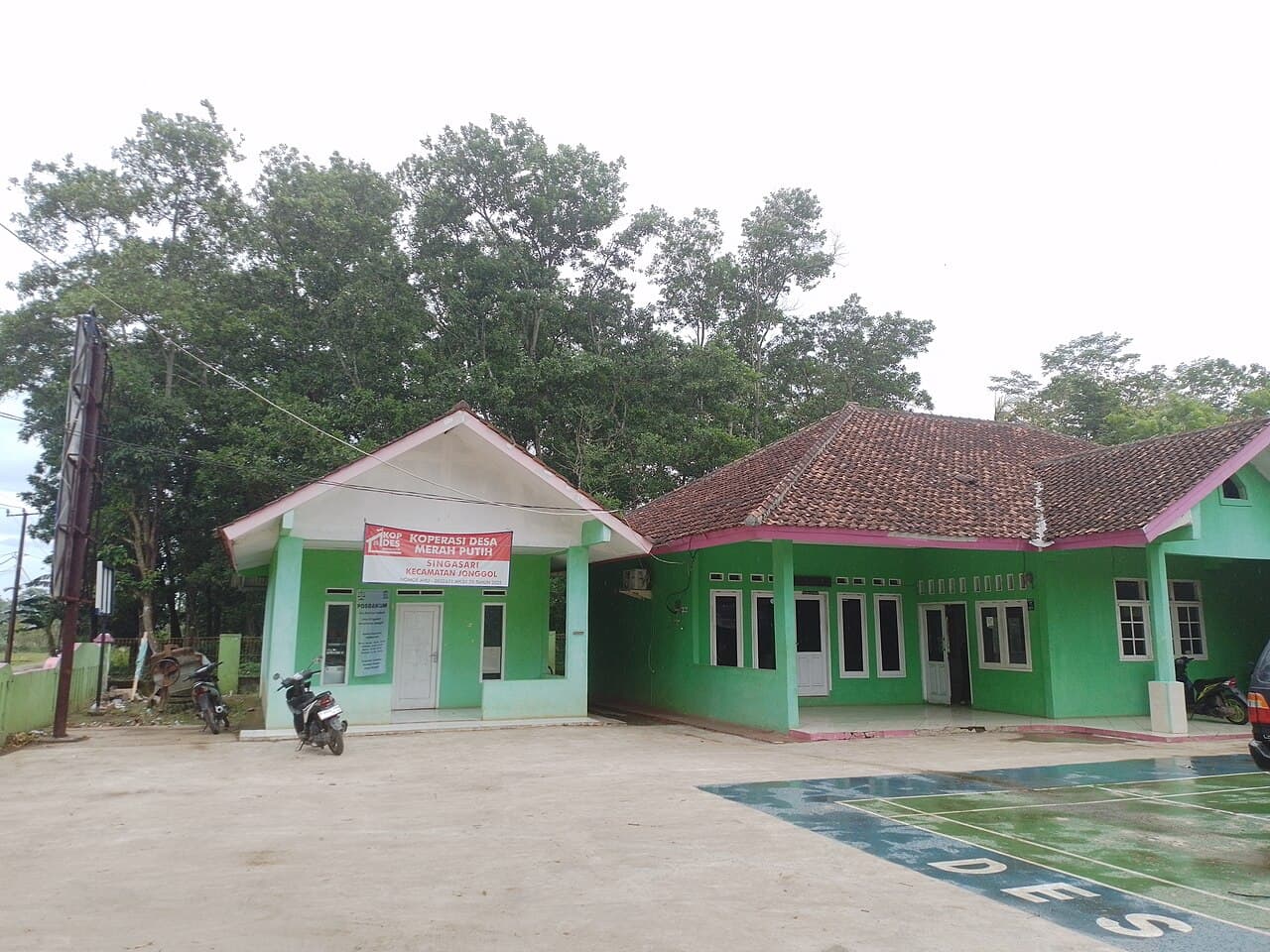
Indonesia's cooperative sector is among the largest in the developing world, with over 140,000 registered cooperatives serving approximately 22 million members across the archipelago's 17,000 islands. Cooperatives hold a constitutionally privileged position in Indonesia: Article 33 of the 1945 Constitution designates cooperatives as the "preferred form of enterprise" — a status reflected in its cooperative governance frameworks. for the Indonesian economy, a status that reflects the founding ideology of the new republic under Sukarno. The Ministry of Cooperatives and Small and Medium Enterprises (Kementerian Koperasi dan UKM) is a dedicated cabinet ministry — unusual internationally — underscoring the sector's political and developmental significance. Despite this institutional support, the sector has struggled with governance quality, and many registered cooperatives are inactive or poorly managed.
Cooperative Sector Overview
Indonesia's cooperative landscape is dominated by two types: Koperasi Simpan Pinjam (KSP) — savings and credit cooperatives — and agricultural cooperatives serving smallholder farmers in commodities like rice, coffee, cocoa, and palm oil. Consumer cooperatives (Koperasi Konsumen) operate in government offices, universities, and workplaces as closed or semi-closed member stores. Worker cooperatives (Koperasi Produsen) are less common but present in craft, batik, and fisheries sectors.
| Metric | Figure |
|---|---|
| Registered cooperatives | 140,000+ |
| Active cooperatives | ~70,000–80,000 (estimated) |
| Total members | ~22 million |
| GDP contribution | ~5% (estimated) |
| Ministry | Kementerian Koperasi dan UKM |
| Primary legislation | Undang-Undang No. 25 Tahun 1992 (Cooperative Law 1992) |
| New framework | UU No. 11 Tahun 2020 (Omnibus Law provisions) |
| Financial cooperative supervision | OJK (Otoritas Jasa Keuangan) for larger KSPs |
The gap between registered and active cooperatives is a persistent challenge. Indonesian government data consistently shows that a significant fraction of registered cooperatives — sometimes estimated at 30–40% — are either dormant or conducting minimal activity. The 2012 attempt to replace the 1992 cooperative law was struck down by the Constitutional Court in 2014. The 2020 Omnibus Law (Cipta Kerja) amended several cooperative provisions.
Key Cooperative Sectors
Savings and Credit Cooperatives (KSP)
Koperasi Simpan Pinjam are the most numerous and financially significant cooperatives in Indonesia. They provide micro-credit, agricultural loans, and savings services to millions of Indonesians who are either unbanked or poorly served by commercial banks. These function similarly to credit cooperatives found across the developing world. KSPs operate at village, sub-district, and city levels, ranging from tiny village credit units to large national-scale organisations.
The largest KSPs include KSP Kospin Jasa (based in Pekalongan, Central Java), one of Indonesia's largest savings and credit cooperatives with assets exceeding IDR 7 trillion (approximately $450 million) and hundreds of thousands of members. Koperasi Warga Semen Gresik serves employees of the Semen Gresik cement company. KSP Sarana Aneka Jasa (SAJ) is another large institution with a national footprint.
A 2020 scandal involving KSP Indosurya — a large KSP that collapsed owing members approximately IDR 14 trillion ($900 million) — severely damaged confidence in the savings and credit cooperative sector. KSP Indosurya had grown rapidly by offering above-market interest rates and operating with insufficient oversight, classic characteristics of a Ponzi-style scheme. The collapse prompted regulatory reform, with OJK gaining supervisory authority over KSPs with assets above IDR 25 billion.
Agricultural Cooperatives
Koperasi Unit Desa (KUD) — Village Unit Cooperatives — were established by the New Order government under President Suharto from the 1970s as the primary vehicle for agricultural development in rural Indonesia. KUDs were created at the village level to distribute subsidised fertilisers and pesticides, collect rice for the national food logistics agency (Bulog), and provide rural credit. At peak, there were over 9,000 KUDs.
The KUD system became heavily associated with government top-down control and corruption during the Suharto era. After democratisation in 1998, KUDs lost their monopoly privileges and many became inactive. Those that survived and reformed — by genuinely serving member farmers' market needs rather than acting as government distribution channels — have become viable agricultural cooperatives.
KPBS Pangalengan (Koperasi Peternakan Bandung Selatan) in West Java is one of Indonesia's most successful dairy cooperatives, supplying fresh milk to major processors including PT Frisian Flag Indonesia (a Dutch company). Founded in 1949, KPBS Pangalengan has approximately 3,600 dairy farmer members. It manages milk cooling, collection, and quality testing as services to its members.
Koperasi Petani Kopi (coffee farmer cooperatives) operate in Aceh, Toraja (South Sulawesi), and East Java, linking smallholder coffee growers to specialty export buyers. Several Acehnese cooperatives are certified organic and fair trade, supplying specialty roasters in Europe, the US, and Japan with the aromatic Gayo arabica coffee variety.
Worker Cooperatives in Fisheries
Indonesia's vast coastal fishery supports a significant number of fishermen's cooperatives (Koperasi Nelayan). These provide collective ownership of fishing equipment, collective marketing of catch, and access to subsidised fuel and ice. KUD Mina (fishermen's cooperative units) were established under a similar government programme to the agricultural KUDs. Their post-Suharto survival record is mixed, though well-managed fishermen's cooperatives in areas like Sulawesi and Maluku remain active.
Employee Cooperatives
Koperasi Karyawan (employee cooperatives) are a widespread form of workplace cooperative in Indonesian companies, government departments, hospitals, and universities. They typically provide members with credit for consumer goods, often as a payroll deduction scheme, and may operate a cooperative store (koperasi konsumen) within the workplace. Koperasi karyawan of large companies like Pertamina (state oil company) and PLN (state electricity company) are among Indonesia's largest cooperatives by asset size, serving tens of thousands of employee-members.
Legal Framework
Undang-Undang No. 25 Tahun 1992 (Cooperative Law)
The primary legislation is UU No. 25/1992 — the Cooperative Law of 1992. It defines a cooperative as a business entity made up of individuals or cooperative legal entities based on cooperative principles and movements of the people's economy. Key provisions:
- Minimum founding members: 20 individuals for primary cooperatives; 3 primary cooperatives for a secondary cooperative
- Annual Member Meeting (Rapat Anggota Tahunan/RAT): The highest authority in a cooperative; must be held annually
- Governance structure: Board of Directors (Pengurus), Supervisory Board (Pengawas), and Manager (non-member)
- Surplus distribution (SHU): Must be distributed partly based on member contributions (transactions) and partly on paid-up capital
- Cooperative funds: Mandatory allocation to reserve funds, cooperative education, and social funds
Constitutional Court Ruling (2014)
The government passed UU No. 17/2012 — a revised Cooperative Law — which was challenged and struck down by the Constitutional Court in 2014. The Court ruled that several provisions violated the spirit of Article 33 of the Constitution by imposing excessively corporate-style governance on cooperatives and allowing non-members to invest in ways that could dilute member ownership. The 1992 law was reinstated.
Omnibus Law Amendments (2020)
The UU Cipta Kerja (Job Creation Law) of 2020 amended several provisions of the 1992 cooperative law, primarily to ease registration, reduce bureaucratic requirements, and clarify digital signature and electronic meeting provisions. The OJK's expanded supervisory role over large KSPs was a significant regulatory change addressing the governance failures exposed by KSP Indosurya and others.
OJK Supervision
OJK (Otoritas Jasa Keuangan) — Indonesia's integrated financial services regulator — now supervises KSPs with assets above IDR 25 billion. Smaller KSPs remain under provincial government oversight. OJK has issued several new regulations on KSP governance, capital adequacy, and disclosure since 2021, significantly strengthening the regulatory framework compared to the pre-2020 regime.
Major Cooperatives
Koperasi Warga Semen Gresik (KWSG)
Founded: 1963 Members: 5,000+ employees of Semen Gresik group Assets: IDR 3+ trillion Sector: Employee cooperative (savings, credit, retail)
KWSG is consistently among Indonesia's top-performing cooperatives by financial metrics. It provides consumer credit, housing loans, and savings to employees of the Semen Indonesia group (the state-owned cement company). Employee cooperatives of major state enterprises tend to be well-governed because their membership is stable, income is predictable, and management is professional.
KSP Kospin Jasa
Founded: 1973 Members: 100,000+ Assets: IDR 7+ trillion Sector: Savings and credit
Kospin Jasa is based in Pekalongan, Central Java, and is one of Indonesia's largest non-employee KSPs. It serves a broad membership including traders, small manufacturers, and households in Central Java. It is regulated by OJK and holds a good supervisory rating. Kospin Jasa is studied as a model of how an independent KSP (not backed by a large employer) can achieve scale and governance quality.
KPBS Pangalengan
Founded: 1949 Members: ~3,600 dairy farmers Sector: Dairy farming and milk collection (West Java)
KPBS Pangalengan is Indonesia's best-known dairy cooperative, operating in the highlands of Bandung district at 1,500 metres altitude — one of the few regions with suitable climate for productive dairy farming in a tropical country. It supplies PT Frisian Flag Indonesia (now part of FrieslandCampina) and PT Indolakto with fresh milk. KPBS provides artificial insemination services, veterinary support, and feed supply to member farmers.
Gabungan Koperasi Batik Indonesia (GKBI)
Founded: 1948 Members: Multiple batik producer cooperatives Sector: Batik textile manufacturing and trade
GKBI is a cooperative federation representing batik producers across Java. Batik — the Indonesian wax-resist fabric tradition — involves thousands of artisan producers, and GKBI has historically coordinated textile inputs, technical training, and export marketing. GKBI also owned significant commercial real estate, including GKBI Tower in Jakarta. The federation has faced governance challenges as the batik industry shifted from artisan production to factory manufacture.
Induk Koperasi Kepolisian (INKOPOL)
Founded: 1970 Members: Indonesian National Police employees Sector: Employee cooperative services (primary national police cooperative)
INKOPOL is the apex cooperative serving members of the Indonesian National Police (Polri). Like other large government employee cooperatives, it provides financial services, consumer goods, and commercial ventures for its members. Government and military employee cooperatives are a distinctive and significant sub-sector in Indonesian cooperatives.
Challenges and Opportunities
Governance and the KSP Indosurya Collapse
The KSP Indosurya scandal is the most significant governance failure in Indonesia's recent cooperative history. Approximately 23,000 members lost savings when Indosurya collapsed in 2020. The cooperative had operated for years with minimal oversight, offering above-market returns and growing rapidly before the failure. The case demonstrated the dangers of light-touch provincial regulation for financial cooperatives and accelerated OJK's expanded supervisory mandate.
High Proportion of Inactive Cooperatives
A persistent structural problem is that a large fraction of Indonesia's 140,000+ registered cooperatives are inactive or technically dormant. Many were established to access government programmes or subsidies rather than to serve genuine member needs. Deregistering inactive cooperatives and improving the quality of active ones is an ongoing Ministry policy challenge.
Rural Financial Inclusion
Despite the large number of KSPs, rural Indonesia remains significantly underbanked. Approximately 50% of adults lack a formal bank account. Savings and credit cooperatives are often the primary formal financial institution in rural areas, but their quality is uneven. Digital payment systems (GoPay, Dana, OVO) are expanding financial access faster than the cooperative sector in urban areas, while rural areas still depend heavily on cooperatives and informal moneylenders.
Digital Transformation
Indonesian cooperatives generally lag investor-owned banks and fintech companies in digital service delivery. OJK and the Ministry of Cooperatives have pushed for digital cooperative platforms, and some KSPs have developed mobile apps for loan applications and account management. But many smaller cooperatives still operate manually, creating operational and fraud vulnerabilities. Digital transformation represents both the most significant operational challenge and opportunity for Indonesian cooperatives in the 2020s.
Related Articles
References & further reading
This guide is researched against primary sources. Where we cite figures, they reflect the most recent data published by these organisations at the time of writing.
- 1.Facts & figures on the cooperative movement — International Cooperative Alliance
- 2.Cooperatives and the world of work — International Labour Organization
Find Cooperatives Worldwide
Browse 26,000+ cooperatives by sector and country in our free directory.